
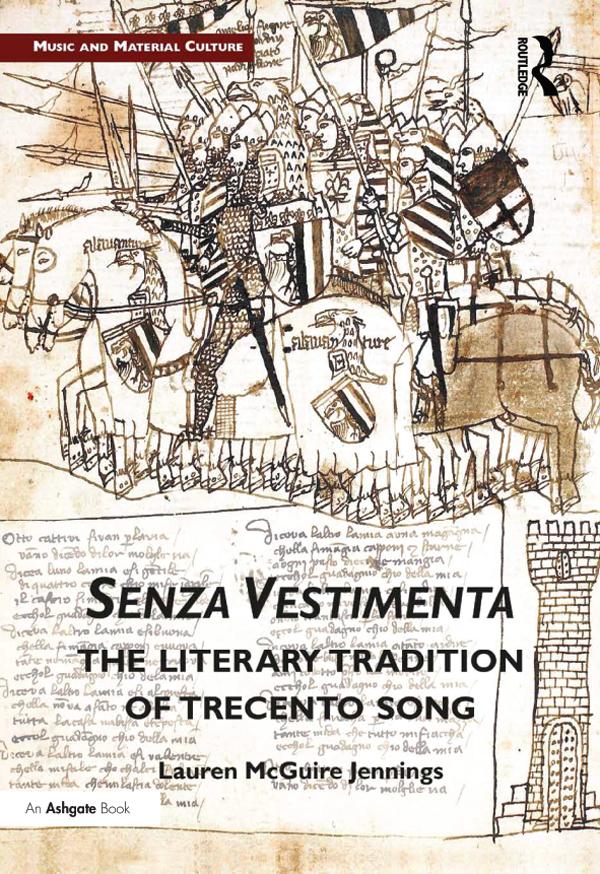
The metaphor of marriage often describes the relationship between poetry and music in both medieval and modern writing. While the troubadours stand out for their tendency to blur the distinction between speaking and singing, between poetry and song, a certain degree of semantic slippage extends into the realm of Italian literature through the use of genre names like canzone, sonetto, and ballata. Yet, paradoxically, scholars have traditionally identified a 'divorce' between music and poetry as the defining feature of early Italian lyric. Senza Vestimenta reintegrates poetic and musical traditions in late medieval Italy through a fresh evaluation of more than fifty literary sources transmitting Trecento song texts. These manuscripts have been long noted by musicologists, but until now they have been used to bolster rather than to debunk the notion that so-called 'poesia per musica' was relegated to the margins of poetic production. Jennings revises this view by exploring how scribes and readers interacted with song as a fundamentally interdisciplinary art form within a broad range of literary settings. Her study sheds light on the broader cultural world surrounding the reception of the Italian ars nova repertoire by uncovering new, diverse readers ranging from wealthy merchants to modest artisans.
Maksa helposti kortilla, Klarnalla, Apple Paylla tai Google Paylla. Etkö ole tyytyväinen? Sinulla on aina 14 päivän palautusoikeus. Lue lisää ehdoistamme. Jos sinulla on kysyttävää, lähetä meille sähköpostia osoitteeseen hello@memmo.org.
Memmo tekee opiskelusta helpompaa – missä päin maailmaa ikinä oletkin. Meillä yhdistät kurssikirjat ja fiksut opiskelutyökalut yhteen paikkaan: tiivistelmät, visat, podcastit ja muistikortit. Ja sitten Ted, opiskelukaverisi, joka vastaa kaikkeen, mitä ikinä mietitkin. Yli 50 000 opiskelijaa opiskelee jo täällä – rakennettu auttamaan sinua oppimaan nopeammin ja stressaamaan vähemmän.