
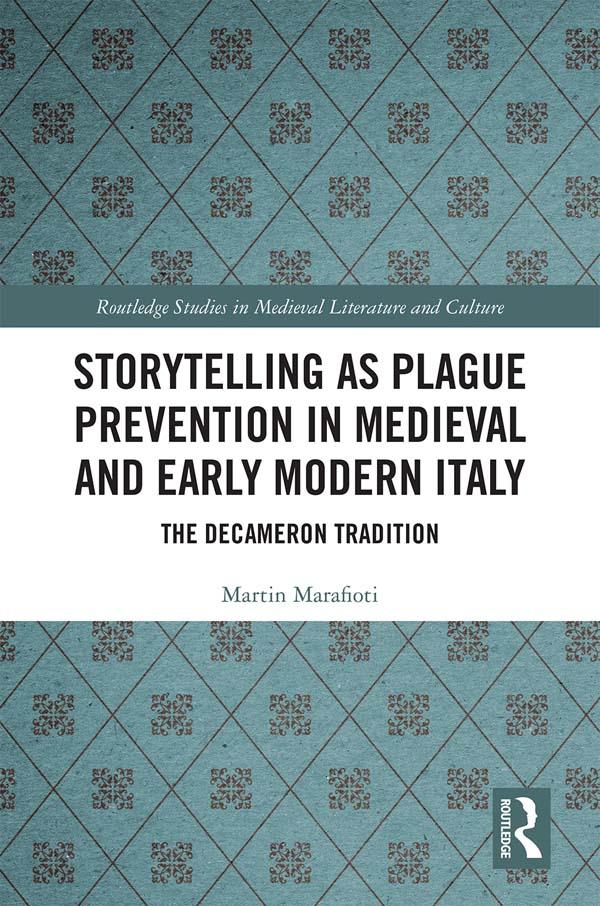
Through close readings of five Italian collections of novellas written over a 500-year period, Martin Marafioti explores the literary tradition of storytelling, and particularly its efficacy as a healing tool following traumatic visitations from the plague. In this study, Giovanni Boccaccio's Decameron provides the framework for later authors. Although Boccaccio was not the first writer to deal with pestilence or epidemics in a literary work, he was the first to unite the topos of a life-threatening context with a public health disaster like the Black Death, and certainly the first author to propose storytelling as a means of prophylaxis in times of plague. Marafioti goes on to analyze Franco Sacchetti's Trecento Novelle, Giovanni Sercambi's Novelliere, Celio Malespini's Duecento Novelle, and Francesco Argelati's Decamerone, following in its longue-durée the ups and down, structurally and thematically, of the realistic novella as a genre.
Sivuja: 154
Kategoria: Litteraturvetenskap & Teori
e-ISBN: 9781317049685
Lähetyspaino: 1.2 kg
Toimitusaika: 1-2 päivää
Maksa helposti kortilla, Klarnalla, Apple Paylla tai Google Paylla. Etkö ole tyytyväinen? Sinulla on aina 14 päivän palautusoikeus. Lue lisää ehdoistamme. Jos sinulla on kysyttävää, lähetä meille sähköpostia osoitteeseen hello@memmo.org.
Memmo tekee opiskelusta helpompaa – missä päin maailmaa ikinä oletkin. Meillä yhdistät kurssikirjat ja fiksut opiskelutyökalut yhteen paikkaan: tiivistelmät, visat, podcastit ja muistikortit. Ja sitten Ted, opiskelukaverisi, joka vastaa kaikkeen, mitä ikinä mietitkin. Yli 50 000 opiskelijaa opiskelee jo täällä – rakennettu auttamaan sinua oppimaan nopeammin ja stressaamaan vähemmän.
Saatat pitää myös näistä
Osta kirja0