
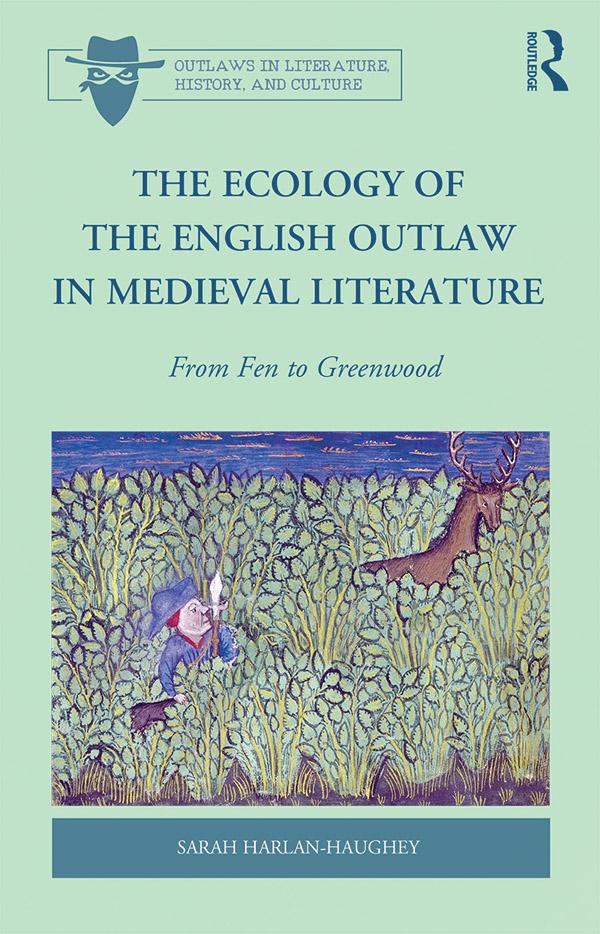
Arguing that outlaw narratives become particularly popular and poignant at moments of national ecological and political crisis, Sarah Harlan-Haughey examines the figure of the outlaw in Anglo-Saxon poetry and Old English exile lyrics such as Beowulf, works dealing with the life and actions of Hereward, the Anglo-Norman romance of Fulk Fitz Waryn, the Robin Hood ballads, and the Tale of Gamelyn. Although the outlaw's wilderness shelter changed dramatically from the menacing fens and forests of Anglo-Saxon England to the bright, known, and mapped greenwood of the late outlaw romances and ballads, Harlan-Haughey observes that the outlaw remained strongly animalistic, other, and liminal. His brutality points to a deep literary ambivalence towards wilderness and the animal, at the same time that figures such as the Anglo-Saxon resistance fighter Hereward, the brutal yet courtly Gamelyn, and Robin Hood often represent a lost England imagined as pristine and forested. In analyzing outlaw literature as a form of nature writing, Harlan-Haughey suggests that it often reveals more about medieval anxieties respecting humanity's place in nature than it does about the political realities of the period.
Maksa helposti kortilla, Klarnalla, Apple Paylla tai Google Paylla. Etkö ole tyytyväinen? Sinulla on aina 14 päivän palautusoikeus. Lue lisää ehdoistamme. Jos sinulla on kysyttävää, lähetä meille sähköpostia osoitteeseen hello@memmo.org.
Memmo tekee opiskelusta helpompaa – missä päin maailmaa ikinä oletkin. Meillä yhdistät kurssikirjat ja fiksut opiskelutyökalut yhteen paikkaan: tiivistelmät, visat, podcastit ja muistikortit. Ja sitten Ted, opiskelukaverisi, joka vastaa kaikkeen, mitä ikinä mietitkin. Yli 50 000 opiskelijaa opiskelee jo täällä – rakennettu auttamaan sinua oppimaan nopeammin ja stressaamaan vähemmän.