
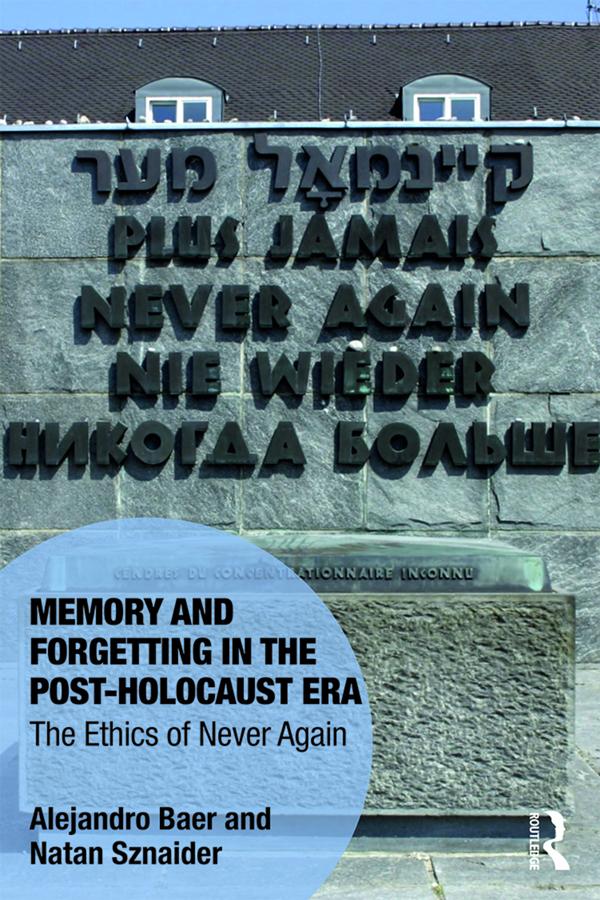
To forget after Auschwitz is considered barbaric. Baer and Sznaider question this assumption not only in regard to the Holocaust but to other political crimes as well. The duties of memory surrounding the Holocaust have spread around the globe and interacted with other narratives of victimization that demand equal treatment. Are there crimes that must be forgotten and others that should be remembered?
In this book the authors examine the effects of a globalized Holocaust culture on the ways in which individuals and groups understand the moral and political significance of their respective histories of extreme political violence. Do such transnational memories facilitate or hamper the task of coming to terms with and overcoming divisive pasts? Taking Argentina, Spain and a number of sites in post-communist Europe as test cases, this book illustrates the transformation from a nationally oriented ethics to a trans-national one. The authors look at media, scholarly discourse, NGOs dealing with human rights and memory, museums and memorial sites, and examine how a new generation of memory activists revisits the past to construct a new future. Baer and Sznaider follow these attempts to manoeuvre between the duties of remembrance and the benefits of forgetting. This, the authors argue, is the "ethics of Never Again."
Maksa helposti kortilla, Klarnalla, Apple Paylla tai Google Paylla. Etkö ole tyytyväinen? Sinulla on aina 14 päivän palautusoikeus. Lue lisää ehdoistamme. Jos sinulla on kysyttävää, lähetä meille sähköpostia osoitteeseen hello@memmo.org.
Memmo tekee opiskelusta helpompaa – missä päin maailmaa ikinä oletkin. Meillä yhdistät kurssikirjat ja fiksut opiskelutyökalut yhteen paikkaan: tiivistelmät, visat, podcastit ja muistikortit. Ja sitten Ted, opiskelukaverisi, joka vastaa kaikkeen, mitä ikinä mietitkin. Yli 50 000 opiskelijaa opiskelee jo täällä – rakennettu auttamaan sinua oppimaan nopeammin ja stressaamaan vähemmän.