
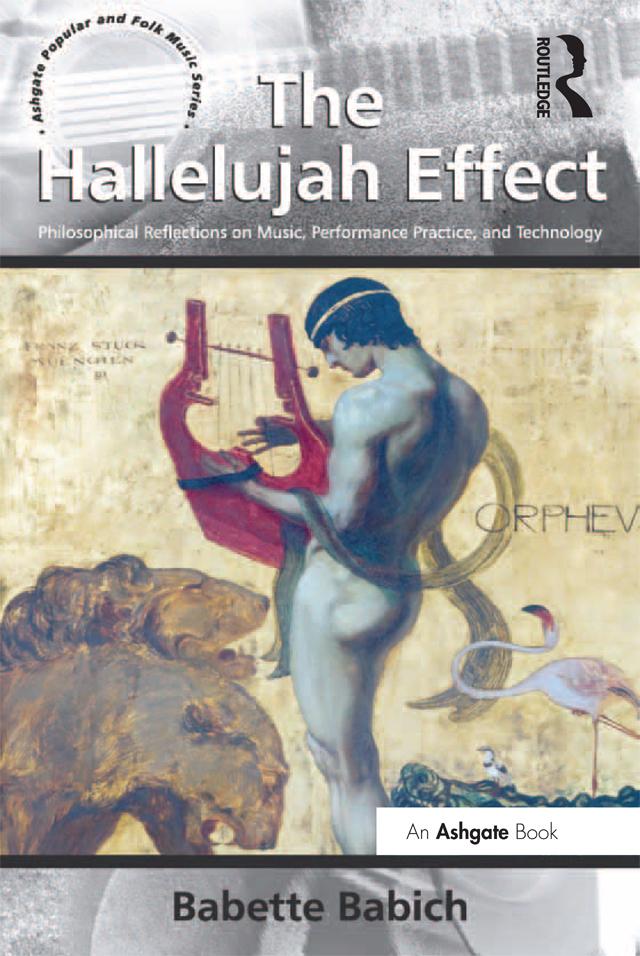
This book studies the working efficacy of Leonard Cohen's song Hallelujah in the context of today's network culture. Especially as recorded on YouTube, k.d. lang's interpretation(s) of Cohen's Hallelujah, embody acoustically and visually/viscerally, what Nietzsche named the 'spirit of music'. Today, the working of music is magnified and transformed by recording dynamics and mediated via Facebook exchanges, blog postings and video sites. Given the sexual/religious core of Cohen's Hallelujah, this study poses a phenomenological reading of the objectification of both men and women, raising the question of desire, including gender issues and both homosexual and heterosexual desire. A review of critical thinking about musical performance as 'currency' and consumed commodity takes up Adorno's reading of Benjamin's analysis of the work of art in the age of mechanical reproduction as applied to music/radio/sound and the persistent role of 'recording consciousness'. Ultimately, the question of what Nietzsche called the becoming-human-of-dissonance is explored in terms of both ancient tragedy and Beethoven's striking deployment of dissonance as Nietzsche analyses both as playing with suffering, discontent, and pain itself, a playing for the sake not of language or sense but musically, as joy.
Maksa helposti kortilla, Klarnalla, Apple Paylla tai Google Paylla. Etkö ole tyytyväinen? Sinulla on aina 14 päivän palautusoikeus. Lue lisää ehdoistamme. Jos sinulla on kysyttävää, lähetä meille sähköpostia osoitteeseen hello@memmo.org.
Memmo tekee opiskelusta helpompaa – missä päin maailmaa ikinä oletkin. Meillä yhdistät kurssikirjat ja fiksut opiskelutyökalut yhteen paikkaan: tiivistelmät, visat, podcastit ja muistikortit. Ja sitten Ted, opiskelukaverisi, joka vastaa kaikkeen, mitä ikinä mietitkin. Yli 50 000 opiskelijaa opiskelee jo täällä – rakennettu auttamaan sinua oppimaan nopeammin ja stressaamaan vähemmän.
Saatat pitää myös näistä
Osta kirja0