
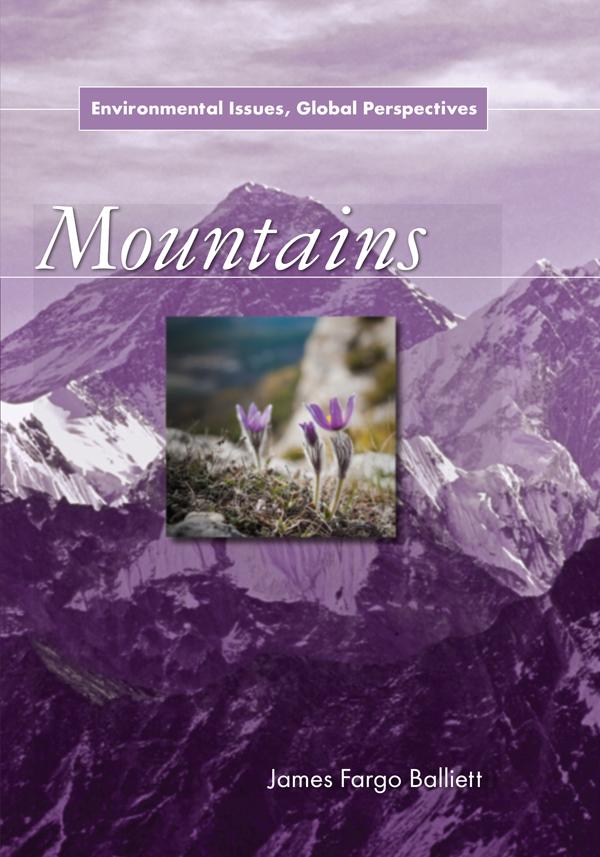
Always awe-inspiring, mountainous areas contain hundreds of millions of years of history, stretching back to the earliest continental landforms. This book shows how mountains are characterized by their distinctive geological, ecological, and biological conditions. Often, they are so large that they create their own weather patterns. They also store nearly one-third of the world’s freshwater—in the form of ice and snow—on their slopes. Despite their daunting size and often formidable climates, mountains are affected by growing local populations, as well as distant influences, such as air pollution and global climate change.
Three detailed case studies are presented. The first shows how global warming in East Africa is harming Mount Kenya’s regional population, which relies on mountain runoff to irrigate farms for subsistence crops. The second examines the fragile ecology of the South Island Mountain in New Zealand’s Southern Alps and how development threatens the region’s endemic plant and animal species. The third discusses the impact of mountain use over time in New Hampshire’s White Mountains, where management efforts have been used to limit the growing footprint of millions of annual visitors and alpine trekkers.
Maksa helposti kortilla, Klarnalla, Apple Paylla tai Google Paylla. Etkö ole tyytyväinen? Sinulla on aina 14 päivän palautusoikeus. Lue lisää ehdoistamme. Jos sinulla on kysyttävää, lähetä meille sähköpostia osoitteeseen hello@memmo.org.
Memmo tekee opiskelusta helpompaa – missä päin maailmaa ikinä oletkin. Meillä yhdistät kurssikirjat ja fiksut opiskelutyökalut yhteen paikkaan: tiivistelmät, visat, podcastit ja muistikortit. Ja sitten Ted, opiskelukaverisi, joka vastaa kaikkeen, mitä ikinä mietitkin. Yli 50 000 opiskelijaa opiskelee jo täällä – rakennettu auttamaan sinua oppimaan nopeammin ja stressaamaan vähemmän.