
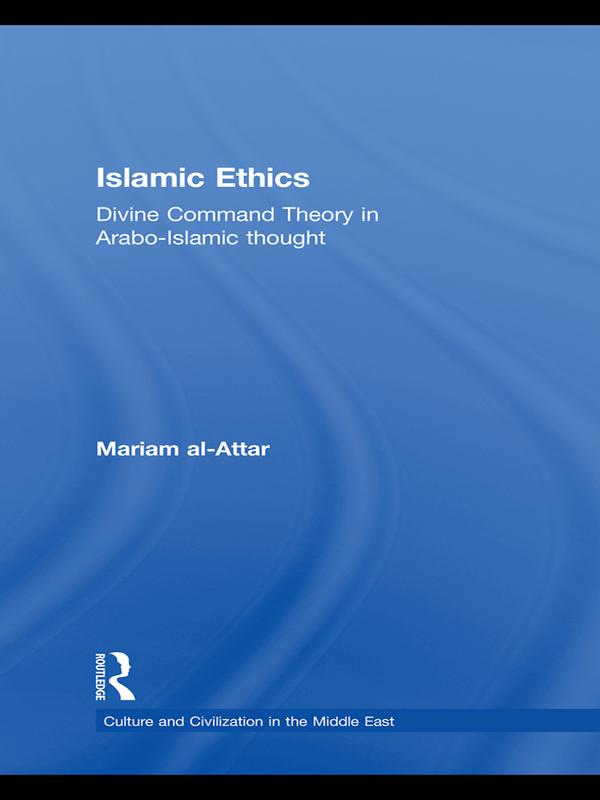
This book explores philosophical ethics in Arabo-Islamic thought. Examining the meaning, origin and development of "Divine Command Theory", it underscores the philosophical bases of religious fundamentalism that hinder social development and hamper dialogue between different cultures and nations.
Challenging traditional stereotypes of Islam, the book refutes contemporary claims that Islam is a defining case of ethical voluntarism, and that the prominent theory in Islamic ethical thought is Divine Command Theory. The author argues that, in fact, early Arab-Islamic scholars articulated moral theories: theories of value and theories of obligation. She traces the development of Arabo-Islamic ethics from the early Islamic theological and political debates between the Kharijites and the Murji’ites, shedding new light on the moral theory of Abd al-Jabbar al-Mu’tazili and the effects of this moral theory on post-Mu’tazilite ethical thought.
Highlighting important aspects in the development of Islamic thought, this book will appeal to students and scholars of Islamic moral thought and ethics, Islamic law, and religious fundamentalism.
Maksa helposti kortilla, Klarnalla, Apple Paylla tai Google Paylla. Etkö ole tyytyväinen? Sinulla on aina 14 päivän palautusoikeus. Lue lisää ehdoistamme. Jos sinulla on kysyttävää, lähetä meille sähköpostia osoitteeseen hello@memmo.org.
Memmo tekee opiskelusta helpompaa – missä päin maailmaa ikinä oletkin. Meillä yhdistät kurssikirjat ja fiksut opiskelutyökalut yhteen paikkaan: tiivistelmät, visat, podcastit ja muistikortit. Ja sitten Ted, opiskelukaverisi, joka vastaa kaikkeen, mitä ikinä mietitkin. Yli 50 000 opiskelijaa opiskelee jo täällä – rakennettu auttamaan sinua oppimaan nopeammin ja stressaamaan vähemmän.