
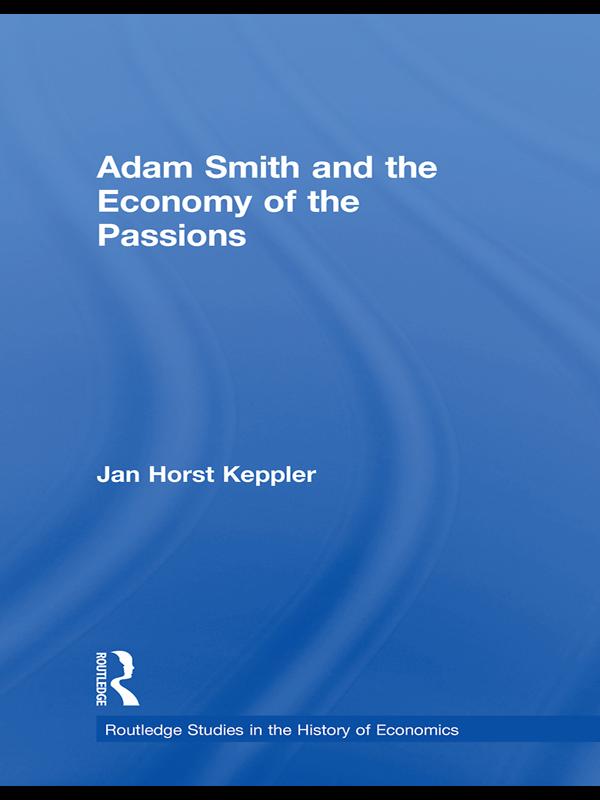
The fertility of Adam Smith’s work stems from a paradoxical structure where the pursuit of economic self-interest and wealth accumulation serve wider social objectives. The incentive for this wealth accumulation comes from a desire for social recognition or "sympathy" – the need to recognise ourselves in our peers – which is the primary incentive for moderating and transforming our violent and egotistical passions. Adam Smith thus examines in detail the subliminal emotional structure underlying market behaviour.
This new book by Professor Jan Horst Keppler presents an Adam Smith for the 21st century, more sceptical, searching and daring than he has ever been portrayed before. Without disputing its benefits, Professor Keppler’s original contribution explores the anarchic passions constantly threatening to destroy all social bounds, and how the overarching "desire for love" and social recognition provides the Smithian individual with the incentive to transform his unsocial passions into a desire for social advancement and economic wealth with the view to gaining the vital approbation of his peers. One of the most striking results of this new reading of Adam Smith is the latter’s insistence on the primacy of exchange value over use value. In other words, the quest for wealth is exclusively driven by the value it represents in the eyes of others rather than by any value in individual use.
At a moment of crisis, where the link between "true" economic values and "virtual" financial values is more fragile than ever, Adam Smith’s work is a profoundly contemporary reminder that in the absence of personal, ethical groundings our economic actions are only grounded in the game of mirrors we play with our peers. This book will be of interest to postgraduate students and researchers in the History of Economics, or indeed any reader with an interest in the psychological foundations of a market economy and its theoretical representations as developed by Adam Smith.
Maksa helposti kortilla, Klarnalla, Apple Paylla tai Google Paylla. Etkö ole tyytyväinen? Sinulla on aina 14 päivän palautusoikeus. Lue lisää ehdoistamme. Jos sinulla on kysyttävää, lähetä meille sähköpostia osoitteeseen hello@memmo.org.
Memmo tekee opiskelusta helpompaa – missä päin maailmaa ikinä oletkin. Meillä yhdistät kurssikirjat ja fiksut opiskelutyökalut yhteen paikkaan: tiivistelmät, visat, podcastit ja muistikortit. Ja sitten Ted, opiskelukaverisi, joka vastaa kaikkeen, mitä ikinä mietitkin. Yli 50 000 opiskelijaa opiskelee jo täällä – rakennettu auttamaan sinua oppimaan nopeammin ja stressaamaan vähemmän.