
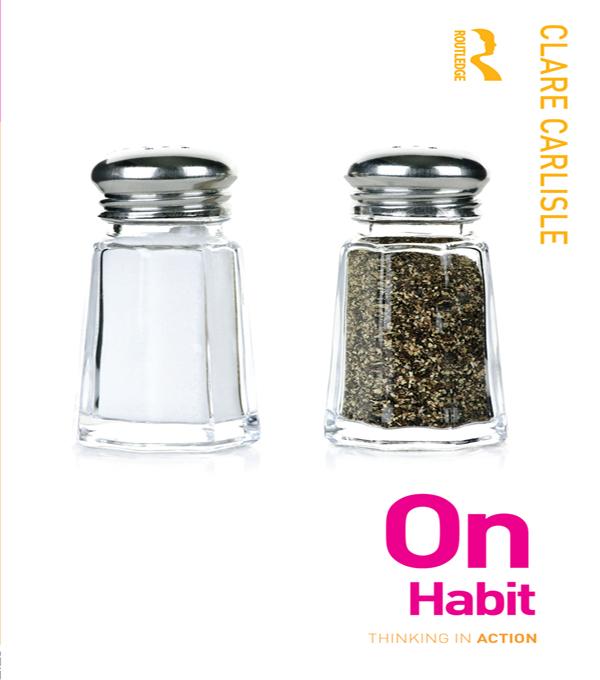
For Aristotle, excellence is not an act but a habit, and Hume regards habit as ‘the great guide of life’. However, for Proust habit is problematic: ‘if habit is a second nature, it prevents us from knowing our first.’
What is habit? Do habits turn us into machines or free us to do more creative things? Should religious faith be habitual? Does habit help or hinder the practice of philosophy? Why do Luther, Spinoza, Kant, Kierkegaard and Bergson all criticise habit? If habit is both a blessing and a curse, how can we live well in our habits?
In this thought-provoking book Clare Carlisle examines habit from a philosophical standpoint. Beginning with a lucid appraisal of habit’s philosophical history she suggests that both receptivity and resistance to change are basic principles of habit-formation. Carlisle shows how the philosophy of habit not only anticipates the discoveries of recent neuroscience but illuminates their ethical significance. She asks whether habit is a reliable form of knowledge by examining the contrasting interpretations of habitual thinking offered by Spinoza and Hume. She then turns to the role of habit in the good life, tracing Aristotle’s legacy through the ideas of Joseph Butler, Hegel, and Félix Ravaisson, and assessing the ambivalent attitudes to habit expressed by Nietzsche and Proust.
She argues that a distinction between habit and practice helps to clarify this ambivalence, particularly in the context of habit and religion, where she examines both the theology of habit and the repetitions of religious life. She concludes by considering how philosophy itself is a practice of learning to live well with habit.
Maksa helposti kortilla, Klarnalla, Apple Paylla tai Google Paylla. Etkö ole tyytyväinen? Sinulla on aina 14 päivän palautusoikeus. Lue lisää ehdoistamme. Jos sinulla on kysyttävää, lähetä meille sähköpostia osoitteeseen hello@memmo.org.
Memmo tekee opiskelusta helpompaa – missä päin maailmaa ikinä oletkin. Meillä yhdistät kurssikirjat ja fiksut opiskelutyökalut yhteen paikkaan: tiivistelmät, visat, podcastit ja muistikortit. Ja sitten Ted, opiskelukaverisi, joka vastaa kaikkeen, mitä ikinä mietitkin. Yli 50 000 opiskelijaa opiskelee jo täällä – rakennettu auttamaan sinua oppimaan nopeammin ja stressaamaan vähemmän.