
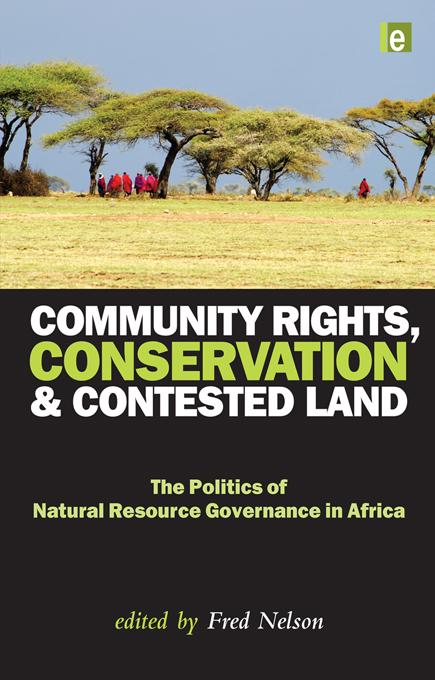
Natural resource governance is central to the outcomes of biodiversity conservation efforts and to patterns of economic development, particularly in resource-dependent rural communities. The institutional arrangements that define natural resource governance are outcomes of political processes, whereby numerous groups with often-divergent interests negotiate for access to and control over resources. These political processes determine the outcomes of resource governance reform efforts, such as widespread attempts to decentralize or devolve greater tenure over land and resources to local communities.
This volume examines the political dynamics of natural resource governance processes through a range of comparative case studies across east and southern Africa. These cases include both local and national settings, and examine issues such as land rights, tourism development, wildlife conservation, participatory forest management, and the impacts of climate change, and are drawn from both academics and field practitioners working across the region.
Published with IUCN, The Bradley Fund for the Environment, SASUSG and Norwegian Ministry of Foreign Affairs
Maksa helposti kortilla, Klarnalla, Apple Paylla tai Google Paylla. Etkö ole tyytyväinen? Sinulla on aina 14 päivän palautusoikeus. Lue lisää ehdoistamme. Jos sinulla on kysyttävää, lähetä meille sähköpostia osoitteeseen hello@memmo.org.
Memmo tekee opiskelusta helpompaa – missä päin maailmaa ikinä oletkin. Meillä yhdistät kurssikirjat ja fiksut opiskelutyökalut yhteen paikkaan: tiivistelmät, visat, podcastit ja muistikortit. Ja sitten Ted, opiskelukaverisi, joka vastaa kaikkeen, mitä ikinä mietitkin. Yli 50 000 opiskelijaa opiskelee jo täällä – rakennettu auttamaan sinua oppimaan nopeammin ja stressaamaan vähemmän.