
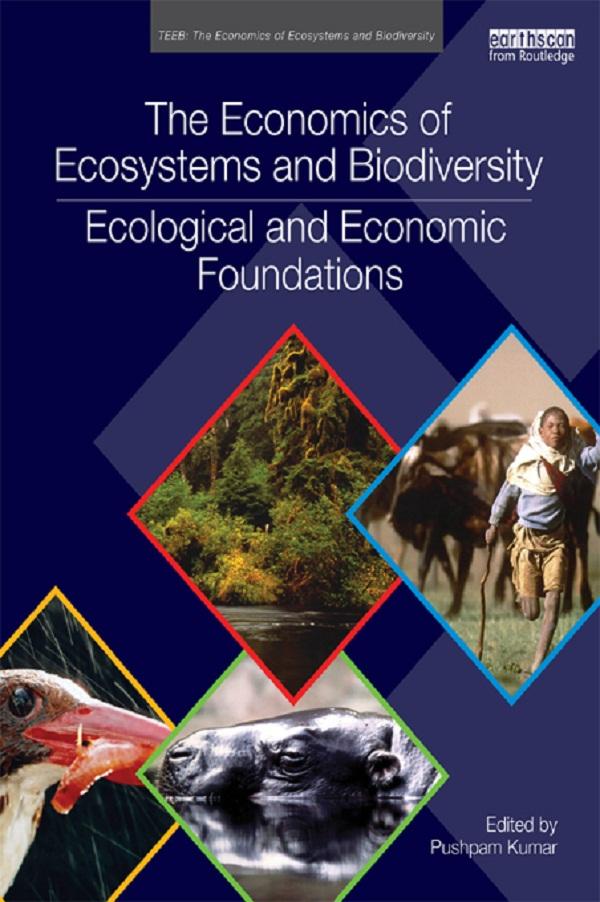
Human well-being relies critically on ecosystem services provided by nature. Examples include water and air quality regulation, nutrient cycling and decomposition, plant pollination and flood control, all of which are dependent on biodiversity. They are predominantly public goods with limited or no markets and do not command any price in the conventional economic system, so their loss is often not detected and continues unaddressed and unabated. This in turn not only impacts human well-being, but also seriously undermines the sustainability of the economic system.
It is against this background that TEEB: The Economics of Ecosystems and Biodiversity project was set up in 2007 and led by the United Nations Environment Programme to provide a comprehensive global assessment of economic aspects of these issues. This book, written by a team of international experts, represents the scientific state of the art, providing a comprehensive assessment of the fundamental ecological and economic principles of measuring and valuing ecosystem services and biodiversity, and showing how these can be mainstreamed into public policies.
This volume and subsequent TEEB outputs will provide the authoritative knowledge and guidance to drive forward the biodiversity conservation agenda for the next decade.
Maksa helposti kortilla, Klarnalla, Apple Paylla tai Google Paylla. Etkö ole tyytyväinen? Sinulla on aina 14 päivän palautusoikeus. Lue lisää ehdoistamme. Jos sinulla on kysyttävää, lähetä meille sähköpostia osoitteeseen hello@memmo.org.
Memmo tekee opiskelusta helpompaa – missä päin maailmaa ikinä oletkin. Meillä yhdistät kurssikirjat ja fiksut opiskelutyökalut yhteen paikkaan: tiivistelmät, visat, podcastit ja muistikortit. Ja sitten Ted, opiskelukaverisi, joka vastaa kaikkeen, mitä ikinä mietitkin. Yli 50 000 opiskelijaa opiskelee jo täällä – rakennettu auttamaan sinua oppimaan nopeammin ja stressaamaan vähemmän.