
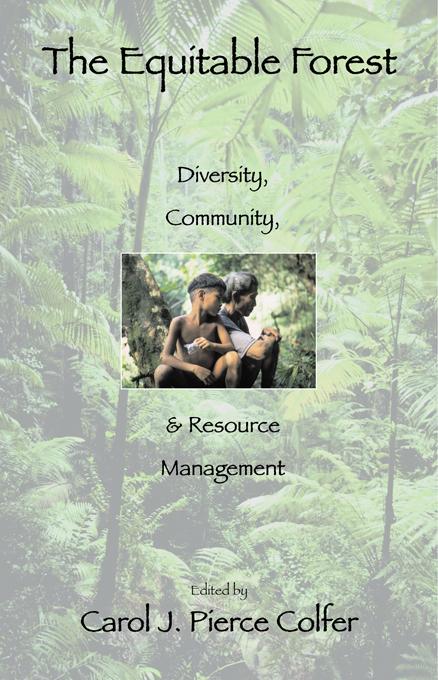
While there continues to be refinement in defining and assessing sustainable management, there remains the urgent need for policies that create the conditions that support sustainability and can halt or slow destructive practices already underway. Carol Colfer and her contributors maintain that standardized solutions to forest problems from afar have failed to address both human and environmental needs. Such approaches, they argue, often neglect the knowledge that local stakeholders have accumulated over generations as forest managers and do not address issues involving the diversity and well-being of groups within communities. The contributors note that these problems persist despite clear evidence that equity and social relationships, including gender roles, are important factors in the ways that communities adapt to change and manage forest resources overall. The Equitable Forest offers an alternative to traditional, externally organized strategies for forest management. Termed adaptive collaborative management (ACM), the approach tries to better acknowledge the diversity, complexity, and unpredictability of human and natural systems. ACM works to strengthen local institutions and use the knowledge and capacity of groups in local communities to enhance the health and well-being of both forests and the people who live in and around them. The Equitable Forest provides a detailed explanation of the descriptive, analytical, and methodological tools of ACM, along with accounts of early stages of its implementation in tropical regions of Asia, Africa, and Latin America. Although the contributors make it clear that it is too soon to evaluate the efficacy of ACM, their work is supported by evidence that rural communities do make important contributions when involved in formal forest management; that management strategies are most effective when flexible and tailored to local contexts; and that efforts by outside governmental and nongovernmental organizations to support local management are feasible from the policymaking perspective, and desirable for their impact on human, economic, and environmental well-being.
Maksa helposti kortilla, Klarnalla, Apple Paylla tai Google Paylla. Etkö ole tyytyväinen? Sinulla on aina 14 päivän palautusoikeus. Lue lisää ehdoistamme. Jos sinulla on kysyttävää, lähetä meille sähköpostia osoitteeseen hello@memmo.org.
Memmo tekee opiskelusta helpompaa – missä päin maailmaa ikinä oletkin. Meillä yhdistät kurssikirjat ja fiksut opiskelutyökalut yhteen paikkaan: tiivistelmät, visat, podcastit ja muistikortit. Ja sitten Ted, opiskelukaverisi, joka vastaa kaikkeen, mitä ikinä mietitkin. Yli 50 000 opiskelijaa opiskelee jo täällä – rakennettu auttamaan sinua oppimaan nopeammin ja stressaamaan vähemmän.
Saatat pitää myös näistä
Osta kirja0