
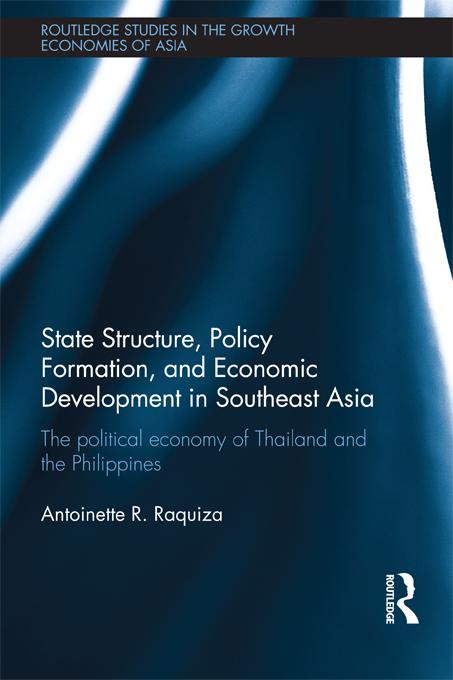
Why do some small, developing countries industrialize and others don’t? What factors account for different economic performance among states that are vulnerable to external shocks, crony capitalism, and political instability? This book argues that the answer lies in the structuring of state power, specifically the way different sets of governing elites – political leaders and economic technocrats – are embedded in political organisations and state institutions, and the way these elites relate to each other in the economic development policy process. Conducting a comparative historical analysis of Thailand and the Philippines, the book argues that the institutional settings of governing elites influence economic outcomes. In Thailand, political power traditionally connects to state institutions in ways that has limited the impact of political turnovers and global downturns - conducive to long-term industrial activities. In contrast, Philippine state power derives from family networks that merge social and political power, suited to fast-moving, short-term commercial interests. In focusing on this political and institutional story, the author analyses the current development dilemmas of countries, weighed down by historical legacies of unstable regimes, dependency, and social conflict, and how they are likely to develop in the future.
Maksa helposti kortilla, Klarnalla, Apple Paylla tai Google Paylla. Etkö ole tyytyväinen? Sinulla on aina 14 päivän palautusoikeus. Lue lisää ehdoistamme. Jos sinulla on kysyttävää, lähetä meille sähköpostia osoitteeseen hello@memmo.org.
Memmo tekee opiskelusta helpompaa – missä päin maailmaa ikinä oletkin. Meillä yhdistät kurssikirjat ja fiksut opiskelutyökalut yhteen paikkaan: tiivistelmät, visat, podcastit ja muistikortit. Ja sitten Ted, opiskelukaverisi, joka vastaa kaikkeen, mitä ikinä mietitkin. Yli 50 000 opiskelijaa opiskelee jo täällä – rakennettu auttamaan sinua oppimaan nopeammin ja stressaamaan vähemmän.