
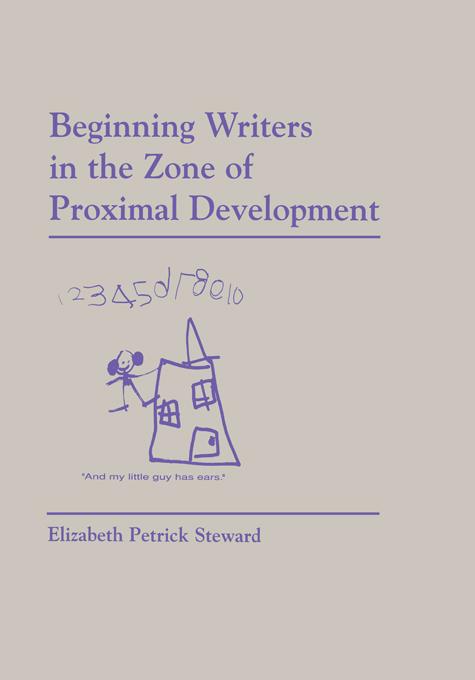
How do young children bridge the gap between "writing" a story with pictures and writing with words? How children learn to use written words to tell a story is a topic important to both cognitive development and early literacy instruction. Using the theoretical framework developed by Vygotsky, the behavior of a group of prekindergarten children as they author two consecutive pieces of writing is analyzed. The children tell their stories at first with spoken words and pictures. As they discuss their work-in-progress in public conferences, they discover how to build on and combine existing skills to produce a new skill -- telling stories with written words.
Current descriptive and theoretical perspectives on beginning writing are presented in this volume, with a particular focus on Vygotsky's concept of the zone of proximal development, a period of sensitivity in which learning advances. The proposed mechanism of change is verbal mediation -- talk among peers and teachers as they discuss work-in-progress -- which moves the children through the zone of proximal development.
An open, whole-language approach to literacy instruction makes the classroom in this book an ideal arena in which to observe verbal mediation in operation. Children are free to question, criticize and argue; and in the process they collectively advance their developing ability to use written language.
The work is unique in that the rich and comprehensive data record is reproduced in its entirety. More than 400 illustrations of the children's products -- two "books" apiece, pictured before and after the children's revisions -- are included, along with transcripts of the conferences about each of the pages, permitting direct observation of the effects of verbal mediation. This dynamic study documents change during a period of time when specific learning is occurring, and provides strong support for the value and power of Vygotsky's theoretical framework.
Maksa helposti kortilla, Klarnalla, Apple Paylla tai Google Paylla. Etkö ole tyytyväinen? Sinulla on aina 14 päivän palautusoikeus. Lue lisää ehdoistamme. Jos sinulla on kysyttävää, lähetä meille sähköpostia osoitteeseen hello@memmo.org.
Memmo tekee opiskelusta helpompaa – missä päin maailmaa ikinä oletkin. Meillä yhdistät kurssikirjat ja fiksut opiskelutyökalut yhteen paikkaan: tiivistelmät, visat, podcastit ja muistikortit. Ja sitten Ted, opiskelukaverisi, joka vastaa kaikkeen, mitä ikinä mietitkin. Yli 50 000 opiskelijaa opiskelee jo täällä – rakennettu auttamaan sinua oppimaan nopeammin ja stressaamaan vähemmän.