
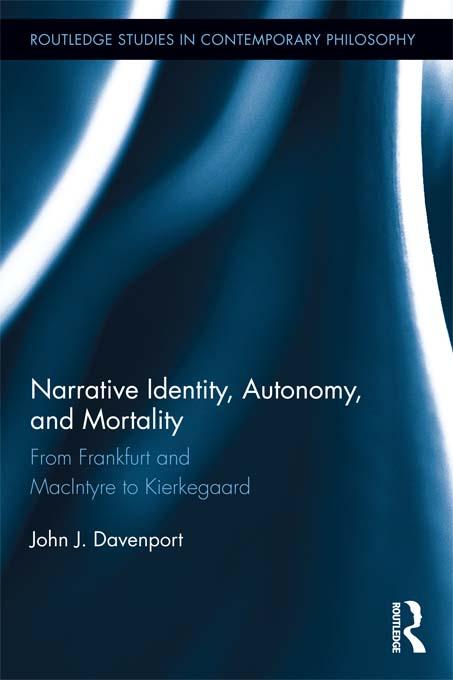
In the last two decades, interest in narrative conceptions of identity has grown exponentially, though there is little agreement about what a "life-narrative" might be. In connecting Kierkegaard with virtue ethics, several scholars have recently argued that narrative models of selves and MacIntyre's concept of the unity of a life help make sense of Kierkegaard's existential stages and, in particular, explain the transition from "aesthetic" to "ethical" modes of life. But others have recently raised difficult questions both for these readings of Kierkegaard and for narrative accounts of identity that draw on the work of MacIntyre in general. While some of these objections concern a strong kind of unity or "wholeheartedness" among an agent's long-term goals or cares, the fundamental objection raised by critics is that personal identity cannot be a narrative, since stories are artifacts made by persons. In this book, Davenport defends the narrative approach to practical identity and autonomy in general, and to Kierkegaard's stages in particular.
Maksa helposti kortilla, Klarnalla, Apple Paylla tai Google Paylla. Etkö ole tyytyväinen? Sinulla on aina 14 päivän palautusoikeus. Lue lisää ehdoistamme. Jos sinulla on kysyttävää, lähetä meille sähköpostia osoitteeseen hello@memmo.org.
Memmo tekee opiskelusta helpompaa – missä päin maailmaa ikinä oletkin. Meillä yhdistät kurssikirjat ja fiksut opiskelutyökalut yhteen paikkaan: tiivistelmät, visat, podcastit ja muistikortit. Ja sitten Ted, opiskelukaverisi, joka vastaa kaikkeen, mitä ikinä mietitkin. Yli 50 000 opiskelijaa opiskelee jo täällä – rakennettu auttamaan sinua oppimaan nopeammin ja stressaamaan vähemmän.