
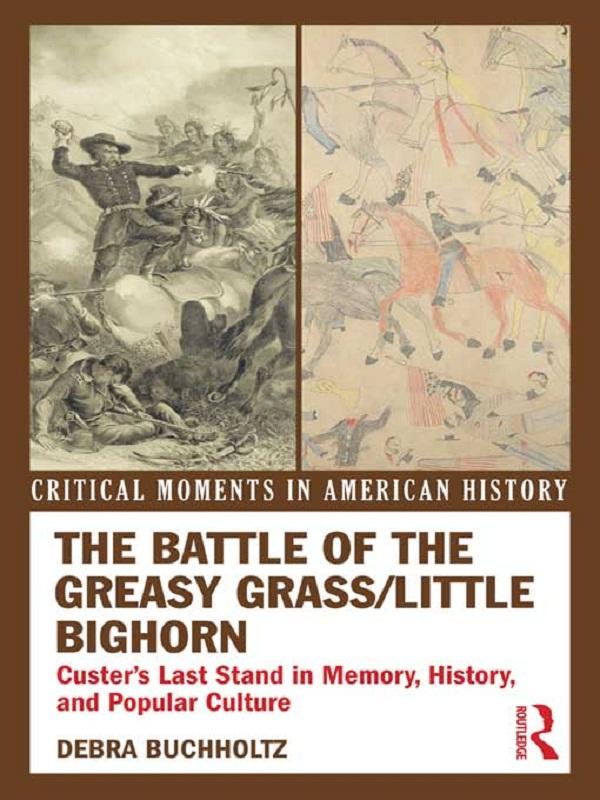
In June of 1876, the U.S. government’s plan to pressure the Lakota and Cheyenne people onto reservations came to a dramatic and violent end with a battle that would become enshrined in American memory. In the eyes of many Americans at the time, the Battle of Little Bighorn represented a symbolic struggle between the civilized and the savage. Known as the Battle of the Greasy Grass to the Lakota, the Battle of Little Bighorn to the people who suppressed them, and as Custer’s Last Stand in the annals of popular culture, the event continues to captivate students of American history.
In The Battle of Little Bighorn, Debra Buchholtz narrates the history of the battle and critically examines the legacy it has left. Through government documents, newspaper articles, and eyewitness accounts, Buchholtz situates the material and symbolic impact of the battle at the time. Using popular film and cultural references, she investigates the ways in which the wake of the event continues to shape the way students understand indigenous peoples, the Wild West, and the history of America.
Maksa helposti kortilla, Klarnalla, Apple Paylla tai Google Paylla. Etkö ole tyytyväinen? Sinulla on aina 14 päivän palautusoikeus. Lue lisää ehdoistamme. Jos sinulla on kysyttävää, lähetä meille sähköpostia osoitteeseen hello@memmo.org.
Memmo tekee opiskelusta helpompaa – missä päin maailmaa ikinä oletkin. Meillä yhdistät kurssikirjat ja fiksut opiskelutyökalut yhteen paikkaan: tiivistelmät, visat, podcastit ja muistikortit. Ja sitten Ted, opiskelukaverisi, joka vastaa kaikkeen, mitä ikinä mietitkin. Yli 50 000 opiskelijaa opiskelee jo täällä – rakennettu auttamaan sinua oppimaan nopeammin ja stressaamaan vähemmän.