
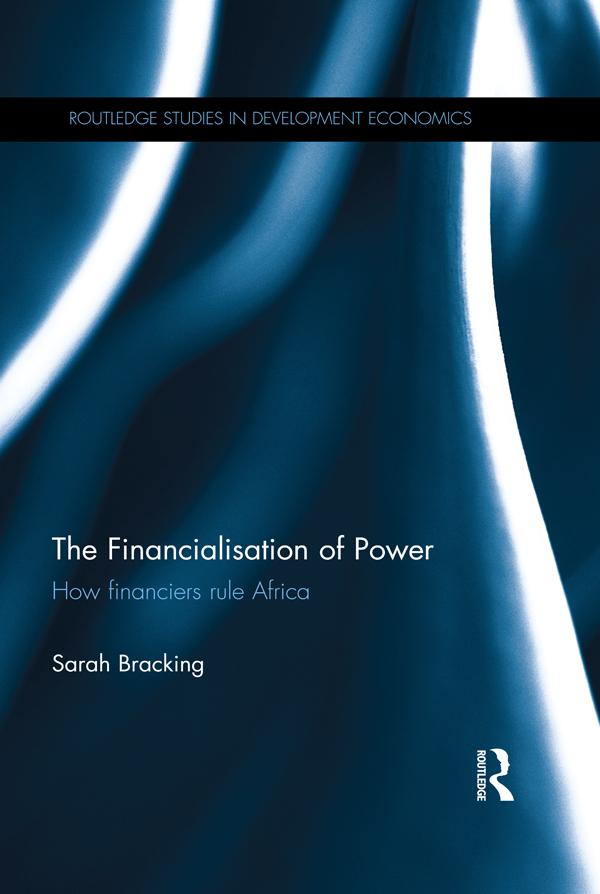
The financial crash of 2008 led people all over the world to ask how far financiers are in control of our lives. To what extent does what they do with our money affect our everyday lives? This book asks whether the crisis, and subsequent use of public subsidies to help the international economy recover, was a unique event, or a symptom of a wider malaise where financiers have effectively usurped the power of governments and are running the political economy themselves.
The Financialisation of Power in Africa argues that growth is not always a good thing. The development of more derivatives and faster financial exchanges are draining businesses of investment capital rather than serving to supply it; applying financial logic does not save nature or protect biodiversity and other species. This book outlines the concept of financialisation and how it has been used in various ways to explain the post-2008 crisis and global political economy. There is a particular focus on these issues in reference to Africa, which has a particular dependence on international money. It takes the perspective of the modern state, exploring how the political economy of development actually works in relation to African governance.
This book is of interest to students of international development and political economy and is a key source for policy makers interested in African studies and economic development.
Maksa helposti kortilla, Klarnalla, Apple Paylla tai Google Paylla. Etkö ole tyytyväinen? Sinulla on aina 14 päivän palautusoikeus. Lue lisää ehdoistamme. Jos sinulla on kysyttävää, lähetä meille sähköpostia osoitteeseen hello@memmo.org.
Memmo tekee opiskelusta helpompaa – missä päin maailmaa ikinä oletkin. Meillä yhdistät kurssikirjat ja fiksut opiskelutyökalut yhteen paikkaan: tiivistelmät, visat, podcastit ja muistikortit. Ja sitten Ted, opiskelukaverisi, joka vastaa kaikkeen, mitä ikinä mietitkin. Yli 50 000 opiskelijaa opiskelee jo täällä – rakennettu auttamaan sinua oppimaan nopeammin ja stressaamaan vähemmän.