
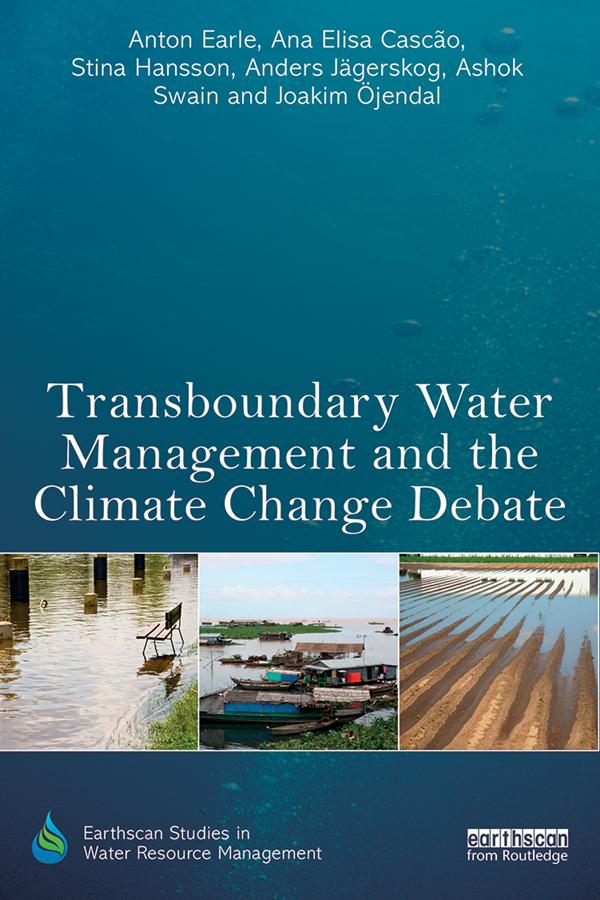
Climate change has an impact on the ability of transboundary water management institutions to deliver on their respective mandates. The starting point for this book is that actors within transboundary water management institutions develop responses to the climate change debate, as distinct from the physical phenomenon of climate change. Actors respond to this debate broadly in three distinct ways – adapt, resist (as in avoiding the issue) and subvert (as in using the debate to fulfil their own agenda).
The book charts approaches which have been taken over the past two decades to promote more effective water management institutions, covering issues of conflict, cooperation, power and law. A new framework for a better understanding of the interaction between transboundary water management institutional resilience and global change is developed through analysis of the way these institutions respond to the climate change debate. This framework is applied to six river case studies from Africa, Asia and the Middle East (Ganges-Brahmaputra, Jordan, Mekong, Niger, Nile, Orange-Senqu) from which learning conclusions and policy recommendations are developed.
Maksa helposti kortilla, Klarnalla, Apple Paylla tai Google Paylla. Etkö ole tyytyväinen? Sinulla on aina 14 päivän palautusoikeus. Lue lisää ehdoistamme. Jos sinulla on kysyttävää, lähetä meille sähköpostia osoitteeseen hello@memmo.org.
Memmo tekee opiskelusta helpompaa – missä päin maailmaa ikinä oletkin. Meillä yhdistät kurssikirjat ja fiksut opiskelutyökalut yhteen paikkaan: tiivistelmät, visat, podcastit ja muistikortit. Ja sitten Ted, opiskelukaverisi, joka vastaa kaikkeen, mitä ikinä mietitkin. Yli 50 000 opiskelijaa opiskelee jo täällä – rakennettu auttamaan sinua oppimaan nopeammin ja stressaamaan vähemmän.