
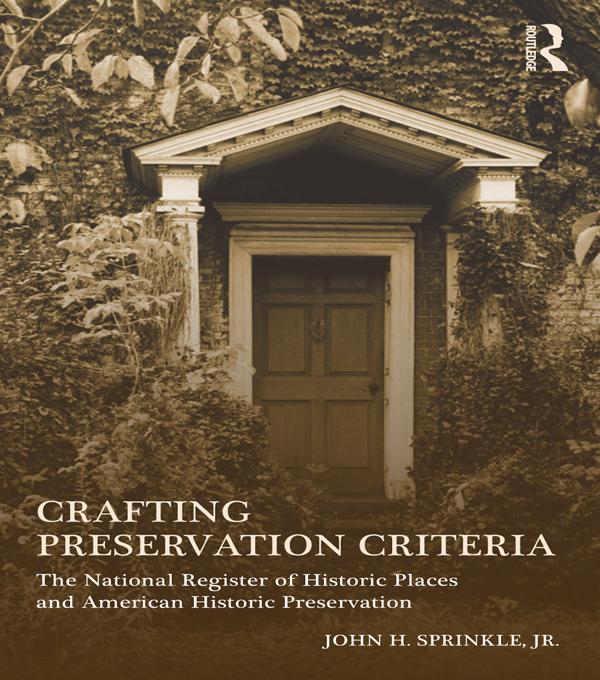
In 1966, American historic preservation was transformed by the passage of the National Historic Preservation Act, which created a National Register of Historic Places. Now comprising more than 1.4 million historic properties across the country, the National Register is the official federal list of places in the United States thought to be worthy of preservation.
One of the fundamental principles of the National Register is that every property is evaluated according to a standard set of criteria that provide the framework for understanding why a property is significant in American history. The origins of these criteria are important because they provide the threshold for consideration by a broad range of federal preservation programs, from planning for continued adaptive use, to eligibility for grants, and inclusion in heritage tourism and educational programs.
Crafting Preservation Criteria sets out these preservation criteria for students, explaining how they got added to the equation, and elucidating the test cases that allowed for their use. From artworks to churches, from 'the fifty year rule' to 'the historic scene', students will learn how places have been historically evaluated to be placed on the National Register, and how the criteria evolved over time.
Maksa helposti kortilla, Klarnalla, Apple Paylla tai Google Paylla. Etkö ole tyytyväinen? Sinulla on aina 14 päivän palautusoikeus. Lue lisää ehdoistamme. Jos sinulla on kysyttävää, lähetä meille sähköpostia osoitteeseen hello@memmo.org.
Memmo tekee opiskelusta helpompaa – missä päin maailmaa ikinä oletkin. Meillä yhdistät kurssikirjat ja fiksut opiskelutyökalut yhteen paikkaan: tiivistelmät, visat, podcastit ja muistikortit. Ja sitten Ted, opiskelukaverisi, joka vastaa kaikkeen, mitä ikinä mietitkin. Yli 50 000 opiskelijaa opiskelee jo täällä – rakennettu auttamaan sinua oppimaan nopeammin ja stressaamaan vähemmän.