
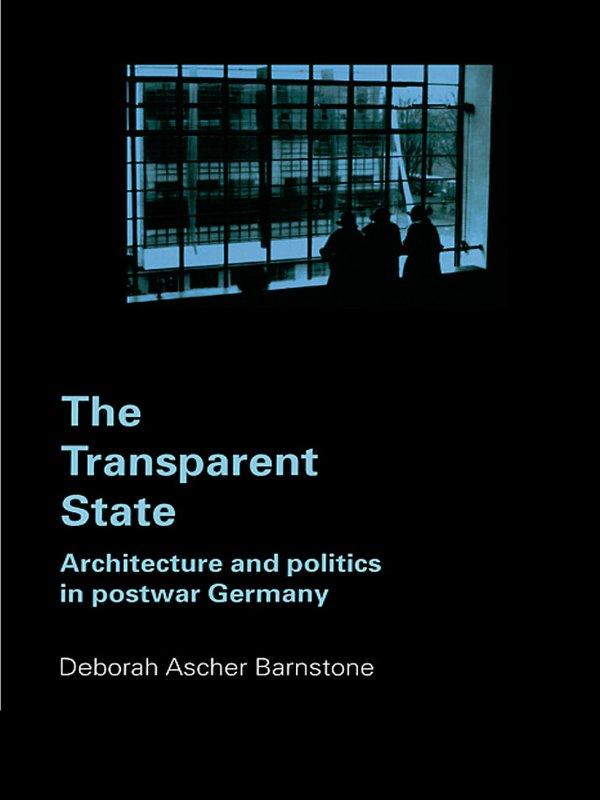
Examining the transformation of transparency as a metaphor in West German political thought to an analogy for democratic architecture, this bookquestions the prevailing assumption in German architectural circles that transparency in governmental buildings can be equated with openness, accessibility and greater democracy.
The Transparent State traces the development of transparency in German political and architectural culture, tying this lineage to the relationship between culture and national identity, a connection that began before unification of the German state in the eighteenth century and continues today. The Weimar Republic and Third Reich periods are examined although the focus is on the postwar period, looking at the use of transparency in the three projects for a national parliament - the 1949 Bundestag project by Hans Schwippert, the 1992 Bundestag building by Gunter Behnisch and the 1999 Reichstag renovation by Norman Foster.
Transparency is an important issue in contemporary architectural practice; this book will appeal to both the practising architect and the architectural historian.
Maksa helposti kortilla, Klarnalla, Apple Paylla tai Google Paylla. Etkö ole tyytyväinen? Sinulla on aina 14 päivän palautusoikeus. Lue lisää ehdoistamme. Jos sinulla on kysyttävää, lähetä meille sähköpostia osoitteeseen hello@memmo.org.
Memmo tekee opiskelusta helpompaa – missä päin maailmaa ikinä oletkin. Meillä yhdistät kurssikirjat ja fiksut opiskelutyökalut yhteen paikkaan: tiivistelmät, visat, podcastit ja muistikortit. Ja sitten Ted, opiskelukaverisi, joka vastaa kaikkeen, mitä ikinä mietitkin. Yli 50 000 opiskelijaa opiskelee jo täällä – rakennettu auttamaan sinua oppimaan nopeammin ja stressaamaan vähemmän.