
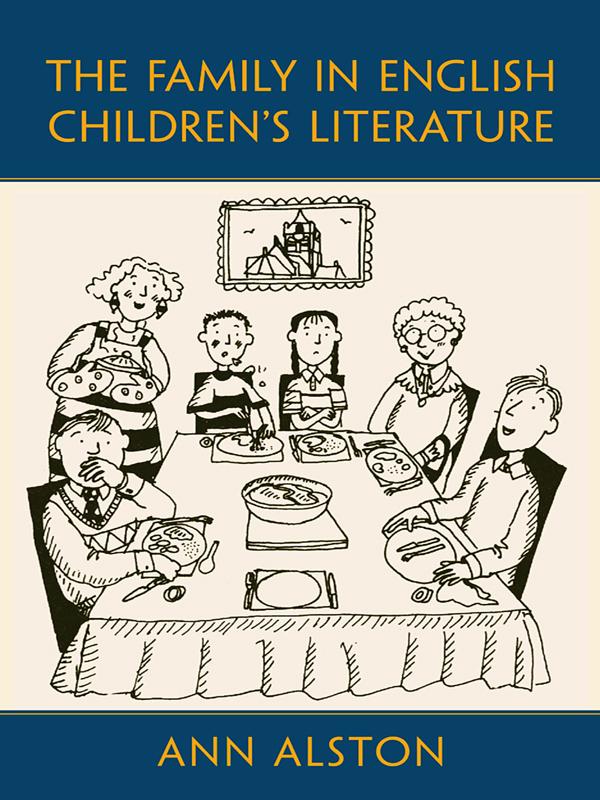
From the trials of families experiencing divorce, as in Anne Fine’s Madame Doubtfire, to the childcare problems highlighted in Jacqueline Wilson’s Tracy Beaker, it might seem that the traditional family and the ideals that accompany it have long vanished. However, in The Family in English Children’s Literature, Ann Alston argues that this is far from the case. She suggests that despite the tales of family woe portrayed in children’s literature, the desire for the happy, contented nuclear family remains inherent within the ideological subtexts of children’s literature. Using 1818 as a starting point, Alston investigates families in children’s literature at their most intimate, focusing on how they share their spaces, their ideals of home, and even on what they eat for dinner. What emerges from Alston’s study are not so much the contrasts that exist between periods, but rather the startling similarities of the ideology of family intrinsic to children’s literature. The Family in English Children’s Literature sheds light on who maintains control, who behaves, and how significant children’s literature is in shaping our ideas about what makes a family "good."
Maksa helposti kortilla, Klarnalla, Apple Paylla tai Google Paylla. Etkö ole tyytyväinen? Sinulla on aina 14 päivän palautusoikeus. Lue lisää ehdoistamme. Jos sinulla on kysyttävää, lähetä meille sähköpostia osoitteeseen hello@memmo.org.
Memmo tekee opiskelusta helpompaa – missä päin maailmaa ikinä oletkin. Meillä yhdistät kurssikirjat ja fiksut opiskelutyökalut yhteen paikkaan: tiivistelmät, visat, podcastit ja muistikortit. Ja sitten Ted, opiskelukaverisi, joka vastaa kaikkeen, mitä ikinä mietitkin. Yli 50 000 opiskelijaa opiskelee jo täällä – rakennettu auttamaan sinua oppimaan nopeammin ja stressaamaan vähemmän.