
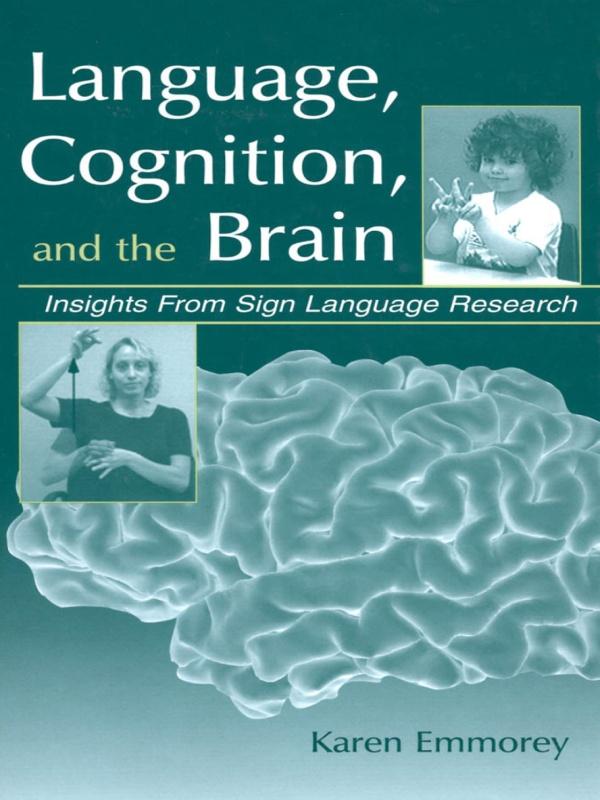
Once signed languages are recognized as natural human languages, a world of exploration opens up. Signed languages provide a powerful tool for investigating the nature of human language and language processing, the relation between cognition and language, and the neural organization of language. The value of sign languages lies in their modality. Specifically, for perception, signed languages depend upon high-level vision and motion processing systems, and for production, they require the integration of motor systems involving the hands and face. These facts raise many questions: What impact does this different biological base have for grammatical systems? For online language processing? For the acquisition of language? How does it affect nonlinguistic cognitive structures and processing? Are the same neural systems involved?
These are some of the questions that this book aims at addressing. The answers provide insight into what constrains grammatical form, language processing, linguistic working memory, and hemispheric specialization for language. The study of signed languages allows researchers to address questions about the nature of linguistic and cognitive systems that otherwise could not be easily addressed.
Maksa helposti kortilla, Klarnalla, Apple Paylla tai Google Paylla. Etkö ole tyytyväinen? Sinulla on aina 14 päivän palautusoikeus. Lue lisää ehdoistamme. Jos sinulla on kysyttävää, lähetä meille sähköpostia osoitteeseen hello@memmo.org.
Memmo tekee opiskelusta helpompaa – missä päin maailmaa ikinä oletkin. Meillä yhdistät kurssikirjat ja fiksut opiskelutyökalut yhteen paikkaan: tiivistelmät, visat, podcastit ja muistikortit. Ja sitten Ted, opiskelukaverisi, joka vastaa kaikkeen, mitä ikinä mietitkin. Yli 50 000 opiskelijaa opiskelee jo täällä – rakennettu auttamaan sinua oppimaan nopeammin ja stressaamaan vähemmän.