
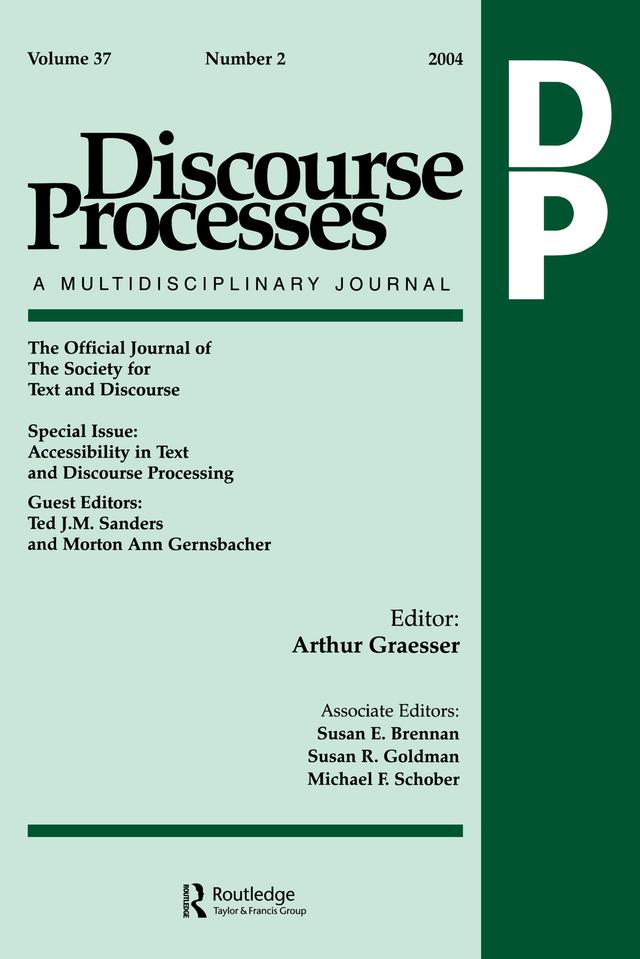
This special issue shows how accessibility phenomena need to be studied from a linguistic and psycholinguistic angle, and in the latter case from interpretation, as well as production. The contributions augment the growing knowledge of accessibility in text and discourse processing. They also illuminate how accessibility is marked in a text or a discourse, how readers and listeners respond to those markings, and how mental representations evolve and change as a direct result of accessibility. The editors hope is that the text affects the readers' representations in ways that linguists and psycholinguists theorize as beneficial.
Maksa helposti kortilla, Klarnalla, Apple Paylla tai Google Paylla. Etkö ole tyytyväinen? Sinulla on aina 14 päivän palautusoikeus. Lue lisää ehdoistamme. Jos sinulla on kysyttävää, lähetä meille sähköpostia osoitteeseen hello@memmo.org.
Memmo tekee opiskelusta helpompaa – missä päin maailmaa ikinä oletkin. Meillä yhdistät kurssikirjat ja fiksut opiskelutyökalut yhteen paikkaan: tiivistelmät, visat, podcastit ja muistikortit. Ja sitten Ted, opiskelukaverisi, joka vastaa kaikkeen, mitä ikinä mietitkin. Yli 50 000 opiskelijaa opiskelee jo täällä – rakennettu auttamaan sinua oppimaan nopeammin ja stressaamaan vähemmän.