
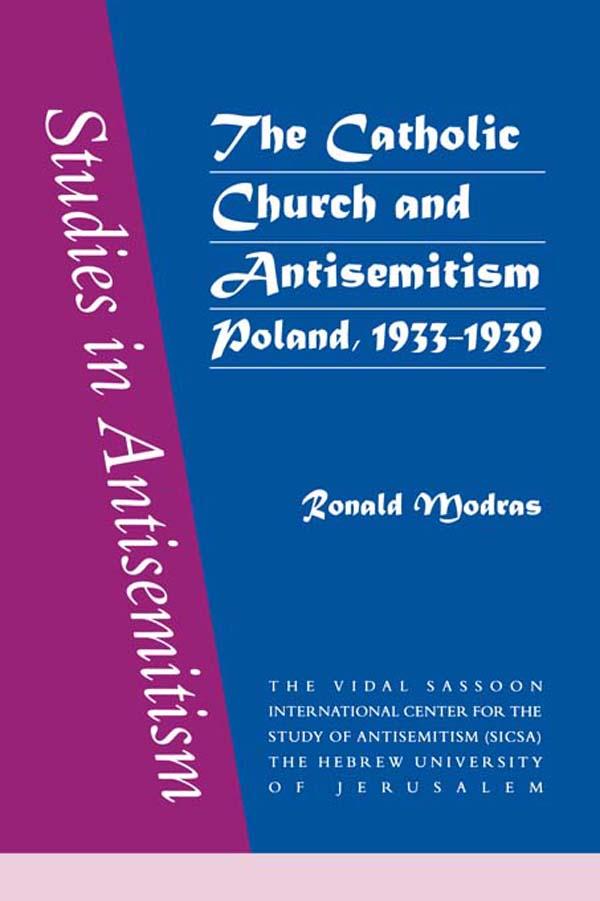
Interwar Poland was home to more Jews than any other country in Europe. Its commonplace but simplistic identification with antisemitism was due largely to nationalist efforts to boycott Jewish business. That they failed was not for want of support by the Catholic clergy, for whom the ''Jewish question'' was more than economic. The myth of a Masonic-Jewish alliance to subvert Christian culture first flourished in France but held considerable sway over Catholics in 1930s Poland as elsewhere. This book examines how, following Vatican policy, Polish church leaders resisted separation of church and state in the name of Catholic culture. In that struggle, every assimilated Jew served as both a symbol and a potential agent of security. Antisemitism is no longer regarded as a legitimate political stance. But in Europe, the United States, and the Middle East, the issues of religious culture, national identity, and minorities are with us still. This study of interwar Poland will shed light on dilemmas that still effect us today.
Maksa helposti kortilla, Klarnalla, Apple Paylla tai Google Paylla. Etkö ole tyytyväinen? Sinulla on aina 14 päivän palautusoikeus. Lue lisää ehdoistamme. Jos sinulla on kysyttävää, lähetä meille sähköpostia osoitteeseen hello@memmo.org.
Memmo tekee opiskelusta helpompaa – missä päin maailmaa ikinä oletkin. Meillä yhdistät kurssikirjat ja fiksut opiskelutyökalut yhteen paikkaan: tiivistelmät, visat, podcastit ja muistikortit. Ja sitten Ted, opiskelukaverisi, joka vastaa kaikkeen, mitä ikinä mietitkin. Yli 50 000 opiskelijaa opiskelee jo täällä – rakennettu auttamaan sinua oppimaan nopeammin ja stressaamaan vähemmän.
Saatat pitää myös näistä
Osta kirja0