
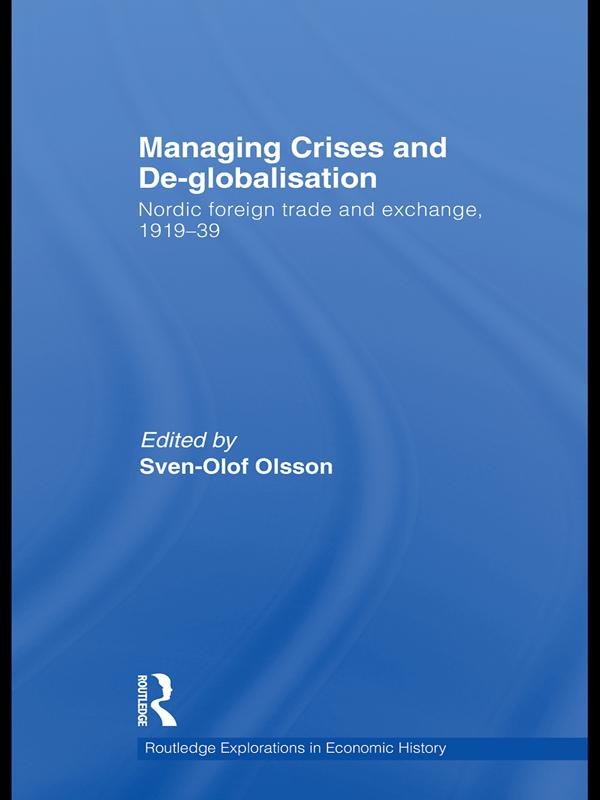
As small, open economies the Nordic states have always been more dependent on foreign trade than larger powers, and have thus had a historic preference for free trade. But during the inter-war period the Nordic countries were squeezed between powerful and aggressive trading partners: above all Great Britain and Germany. Although the period between the end of the First World War and 1929 was marked by a return to a liberal world economy, the Great Depression ushered in a decade of protectionism. The bilateralisation of international trade was especially evident after Britain’s Ottawa treaties in 1932 and the Nazi seizure of power in 1933. Their dependence on trade with Britain and Germany meant that the Nordic countries were exposed to the full force of British and German bilateralism.
The paradox is that in spite of international trade wars and regulated exchange the Nordic countries managed better than other European states during the interwar period, and that the Great Depression was not as deep or long lasting as in other countries. The chapters in this book discuss why and how this rather successful Nordic experience was achieved. The topics covered include commercial and monetary policies but also important industries such as forestry, agriculture and fishing. Many of the chapters are comparative and discuss economic developments in two or more Nordic countries.
Maksa helposti kortilla, Klarnalla, Apple Paylla tai Google Paylla. Etkö ole tyytyväinen? Sinulla on aina 14 päivän palautusoikeus. Lue lisää ehdoistamme. Jos sinulla on kysyttävää, lähetä meille sähköpostia osoitteeseen hello@memmo.org.
Memmo tekee opiskelusta helpompaa – missä päin maailmaa ikinä oletkin. Meillä yhdistät kurssikirjat ja fiksut opiskelutyökalut yhteen paikkaan: tiivistelmät, visat, podcastit ja muistikortit. Ja sitten Ted, opiskelukaverisi, joka vastaa kaikkeen, mitä ikinä mietitkin. Yli 50 000 opiskelijaa opiskelee jo täällä – rakennettu auttamaan sinua oppimaan nopeammin ja stressaamaan vähemmän.