
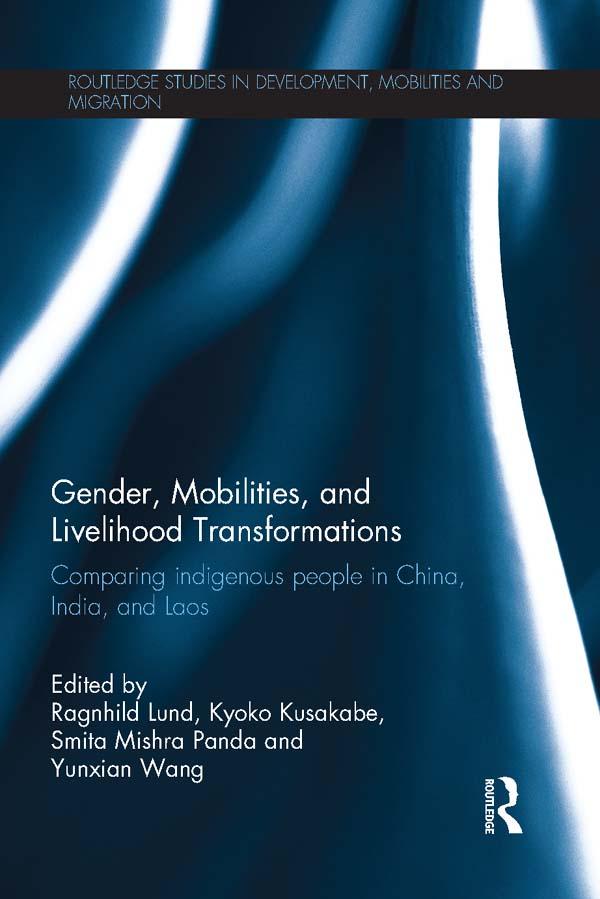
In the era of globalization many minority populations are subject to marginalization and expulsion from their traditional habitats due to rapid economic restructuring and changing politico-spatial relations. This book presents an analytical framework for understanding how mobility is an inherent part of such changes.
The book demonstrates how current neoliberal policies are making people increasingly on the move – whether voluntarily or forced, and whether individually, as family, or as whole communities – and how such mobility is changing the livelihoods of indigenous people, with particular focus on how these transformations are gendered. It queries how state policies and cross-border and cross-regional connections have shaped and redefined the livelihood patterns, rights and citizenship, identities, and gender relations of indigenous peoples. It also identifies the dynamic changes that indigenous men and women are facing, given rapid infrastructure improvements and commercialization and/or industrialization in their places of Environment.
With a focus on mobility, this innovative book gives students and researchers in development studies, gender studies, human geography, anthropology and Asian studies a more realistic assessment of peoples livelihood choices under a time of rapid transformation, and the knowledge produced may add value to present development policies and practices.
Maksa helposti kortilla, Klarnalla, Apple Paylla tai Google Paylla. Etkö ole tyytyväinen? Sinulla on aina 14 päivän palautusoikeus. Lue lisää ehdoistamme. Jos sinulla on kysyttävää, lähetä meille sähköpostia osoitteeseen hello@memmo.org.
Memmo tekee opiskelusta helpompaa – missä päin maailmaa ikinä oletkin. Meillä yhdistät kurssikirjat ja fiksut opiskelutyökalut yhteen paikkaan: tiivistelmät, visat, podcastit ja muistikortit. Ja sitten Ted, opiskelukaverisi, joka vastaa kaikkeen, mitä ikinä mietitkin. Yli 50 000 opiskelijaa opiskelee jo täällä – rakennettu auttamaan sinua oppimaan nopeammin ja stressaamaan vähemmän.