
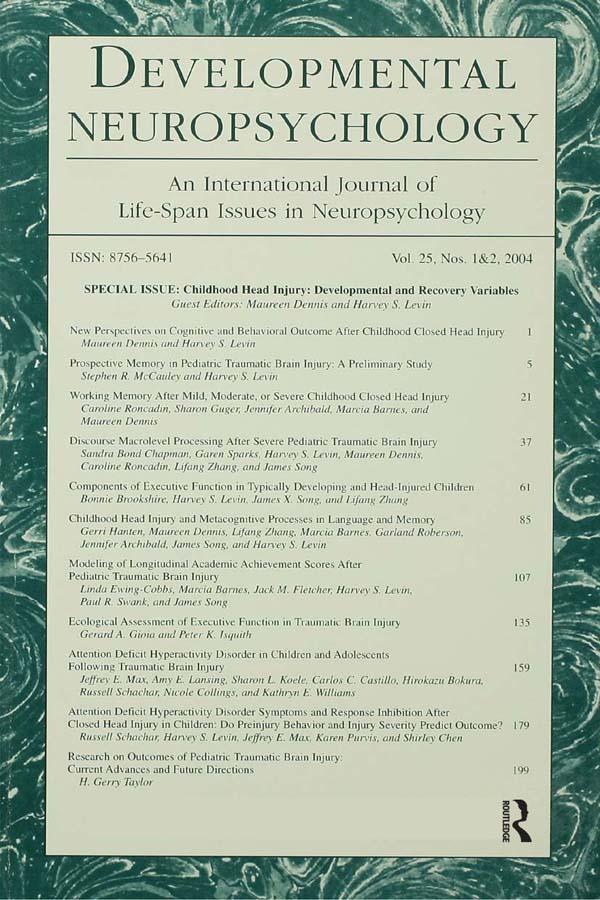
Childhood head injuries differ from adult head injuries in some significant respects. They occur against a background of ongoing physical and cognitive development. Cognitive capacities often change with time post-injury. But for children changes are affected by two processes of functional plasticity, one concerned with recovery, one with development. The impact of the injury is moderated by age/developmental stage.
In recent years there has been a new focus on the longitudinal comparison of children post-injury with appropriate control groups. Advances in neuropsychological assessment have permitted evaluation with reference to more developmentally suitable norms; expanded definitions of outcome have broadened our understanding of consequences; and neuroimaging techniques have enabled the more precise delineation of injury severity, the study of structure-function outcome relations, and the investigation of reorganization of function.
This special issue offers an overview of cutting-edge approaches to the analysis of childhood head injury.
Maksa helposti kortilla, Klarnalla, Apple Paylla tai Google Paylla. Etkö ole tyytyväinen? Sinulla on aina 14 päivän palautusoikeus. Lue lisää ehdoistamme. Jos sinulla on kysyttävää, lähetä meille sähköpostia osoitteeseen hello@memmo.org.
Memmo tekee opiskelusta helpompaa – missä päin maailmaa ikinä oletkin. Meillä yhdistät kurssikirjat ja fiksut opiskelutyökalut yhteen paikkaan: tiivistelmät, visat, podcastit ja muistikortit. Ja sitten Ted, opiskelukaverisi, joka vastaa kaikkeen, mitä ikinä mietitkin. Yli 50 000 opiskelijaa opiskelee jo täällä – rakennettu auttamaan sinua oppimaan nopeammin ja stressaamaan vähemmän.