
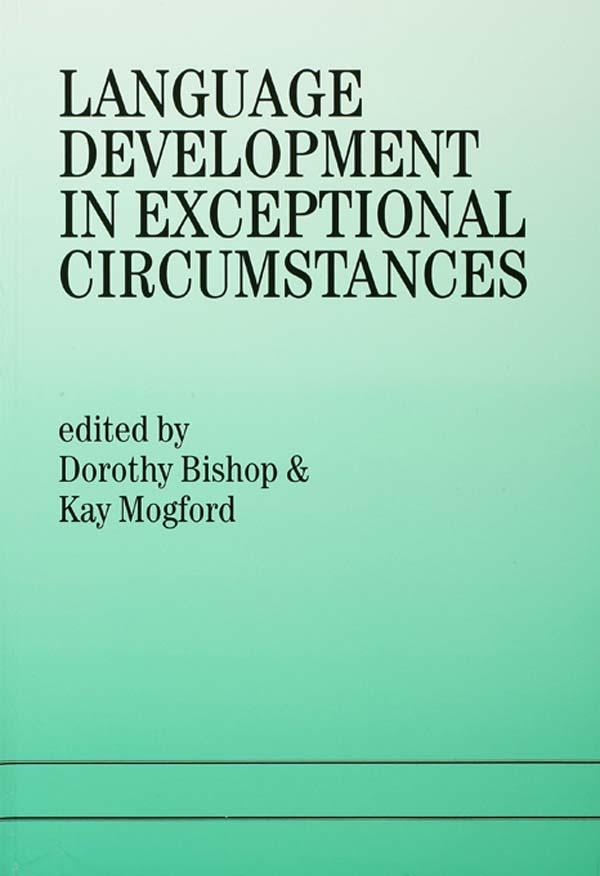
Ever since attempts were made to describe and explain normal language development, references to exceptional circumstances have been made. Variations in the conditions under which language is acquired can be regarded as natural experiments, which would not be feasible or ethical under normal circumstances. This can throw light on such questions as:
*What language input is necessary for the child to learn language?
*What is the relationship between cognition and language?
*How independent are different components of language function?
*Are there critical periods for language development?
*Can we specify necessary and sufficient conditions for language impairment? This book covers a range of exceptional circumstances including: extreme deprivation, twinship, visual and auditory impairments, autism and focal brain damage?
Written in a jargon-free style, and including a glossary of linguistic and medical terminology, the book assumes little specialist knowledge. This text is suitable for both students and practitioners in the fields of psycholinguistics, developmental and educational psychology, speech pathology, paediatrics and special education.
Maksa helposti kortilla, Klarnalla, Apple Paylla tai Google Paylla. Etkö ole tyytyväinen? Sinulla on aina 14 päivän palautusoikeus. Lue lisää ehdoistamme. Jos sinulla on kysyttävää, lähetä meille sähköpostia osoitteeseen hello@memmo.org.
Memmo tekee opiskelusta helpompaa – missä päin maailmaa ikinä oletkin. Meillä yhdistät kurssikirjat ja fiksut opiskelutyökalut yhteen paikkaan: tiivistelmät, visat, podcastit ja muistikortit. Ja sitten Ted, opiskelukaverisi, joka vastaa kaikkeen, mitä ikinä mietitkin. Yli 50 000 opiskelijaa opiskelee jo täällä – rakennettu auttamaan sinua oppimaan nopeammin ja stressaamaan vähemmän.
Saatat pitää myös näistä
Osta kirja0