
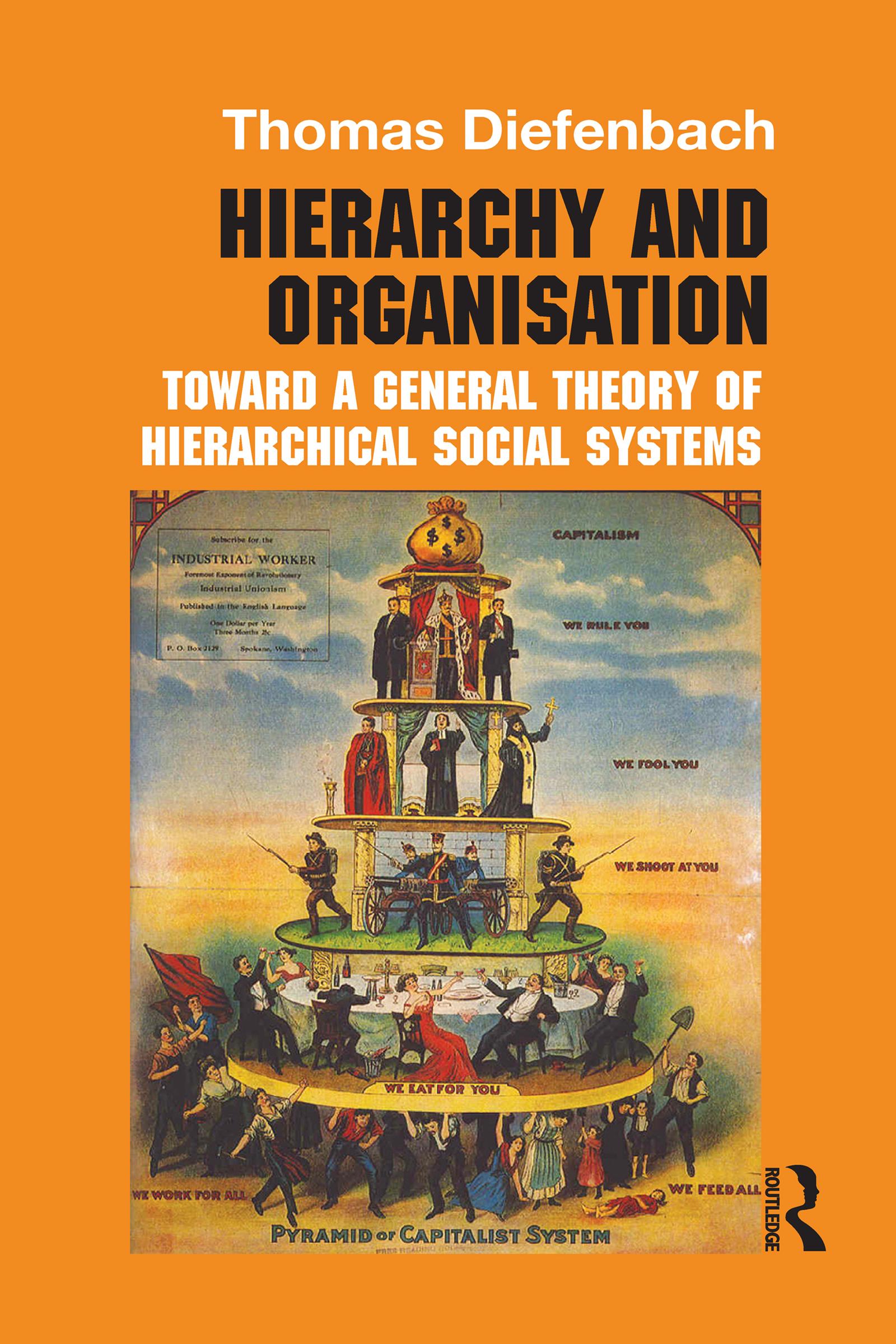
Most people take the conditions they work and live in as a given, believing it to be normal that societies are stratified and that organisations are hierarchical. Many even think that this is the way it should be - and are neither willing nor able to think that it could be otherwise. This book raises the awareness of hierarchy, its complexity and longevity. It focuses on a single but fundamental problem of social systems such as dyads, groups, organisations and whole societies: Why and how does hierarchical social order persist over time? In order to investigate the question, author Thomas Diefenbach develops a general theory of the persistence of hierarchical social order. This theory interrogates the problem of the persistence of hierarchical social order from very different angles, in multi-dimensional and interdisciplinary ways. Even more crucially, it traces the very causes of the phenomenon, the reasons and interests behind hierarchy as well as the various mechanisms which keep it going.
This is the first time such a theory is attempted. With the help of the theory developed in this book, it is possible to interrogate systematically, comprehensively and in detail how mindsets and behaviours as well as societal and organisational structures enable the continuation of hierarchy
Maksa helposti kortilla, Klarnalla, Apple Paylla tai Google Paylla. Etkö ole tyytyväinen? Sinulla on aina 14 päivän palautusoikeus. Lue lisää ehdoistamme. Jos sinulla on kysyttävää, lähetä meille sähköpostia osoitteeseen hello@memmo.org.
Memmo tekee opiskelusta helpompaa – missä päin maailmaa ikinä oletkin. Meillä yhdistät kurssikirjat ja fiksut opiskelutyökalut yhteen paikkaan: tiivistelmät, visat, podcastit ja muistikortit. Ja sitten Ted, opiskelukaverisi, joka vastaa kaikkeen, mitä ikinä mietitkin. Yli 50 000 opiskelijaa opiskelee jo täällä – rakennettu auttamaan sinua oppimaan nopeammin ja stressaamaan vähemmän.