
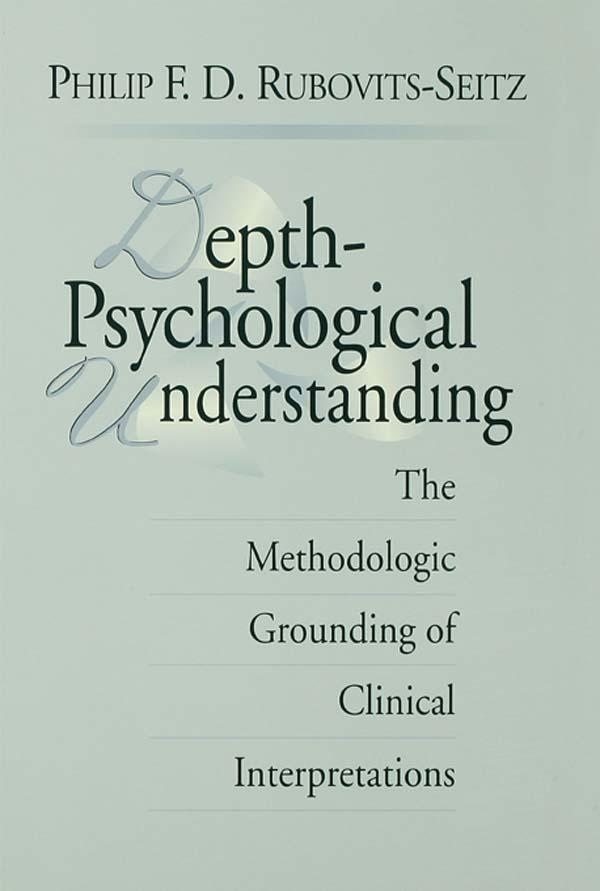
Although clinical interpretation originated with Freud, the latter's positivist preference for purely observational methods made him ambivalent toward interpretive methods. According to Rubovits-Seitz, the legacy of Freud's positivism still pervades clinical thinking and interferes with progress in investigating and improving interpretive methods. He reviews the paradigm shift in general science from positivism to postpositivism by way of demonstrating the compatibility of interpretive inquiry with a postpositivist approach.
Post-Freudian models of clinical interpretation are evaluated, andclinical methods of interpretation are compared with interpretive approachesin nonclinical fields. A detailed discussion of the neglected problem ofjustifying interpretations incorporates evaluations of specific justifyingprocedures and a case report illustrating applications of such methods. Thework concludes with a consideration of common but avoidable errors in clinicalinterpretation along with remedial strategies for dealing with them.
Following Depth-Psychological Understanding, clinicians may no longer take for granted the interpretive process and the accuracy of their own interpretations. Rubovits-Seitz's scholarly survey marks a major advance in comprehending the methodology of clinical interpretation and in setting forth both the problems and promise of interpretive methods.
Maksa helposti kortilla, Klarnalla, Apple Paylla tai Google Paylla. Etkö ole tyytyväinen? Sinulla on aina 14 päivän palautusoikeus. Lue lisää ehdoistamme. Jos sinulla on kysyttävää, lähetä meille sähköpostia osoitteeseen hello@memmo.org.
Memmo tekee opiskelusta helpompaa – missä päin maailmaa ikinä oletkin. Meillä yhdistät kurssikirjat ja fiksut opiskelutyökalut yhteen paikkaan: tiivistelmät, visat, podcastit ja muistikortit. Ja sitten Ted, opiskelukaverisi, joka vastaa kaikkeen, mitä ikinä mietitkin. Yli 50 000 opiskelijaa opiskelee jo täällä – rakennettu auttamaan sinua oppimaan nopeammin ja stressaamaan vähemmän.