
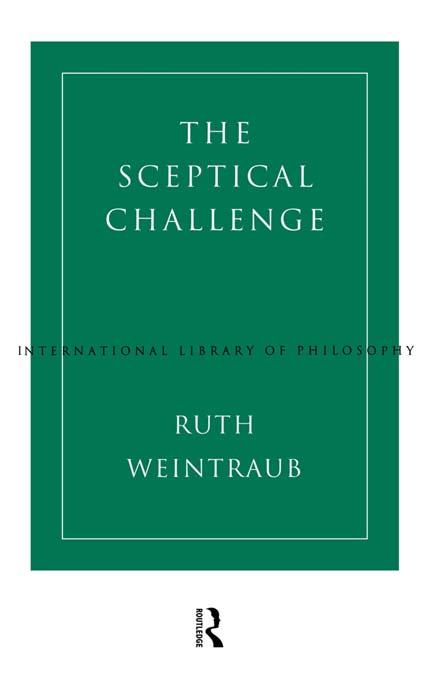
Do we really know the things we think we know? Are any of our beliefs reasonable? Scepticism gives a pessimistic reply to these important epistemological questions - we don't know anything; none of our beliefs are reasonable. But can such a seemingly paradoxical claim be more than an intellectual curiousity? And if it is, can it be refuted? Ruth Weintraub answers yes to both these questions.
The sceptical challenge is a formidable one, and should be confronted, not dismissed. The theoretical and practical difficulties it presents - in that the sceptical life cannot be lived, and the doctrine seems self-defeating - are in fact superficial, according to Ruth Weintraub. Her study looks at the sceptical arguments of Descartes, Hume and the ancient Greek sceptic, Sextus Empiricus. The author argues that by drawing on philosophy, rather than science, the sceptical challenge can be answered.
The Sceptical Challenge is a bold and original response to scepticism; it represents a new way of looking at the field for philosophers of epistemology.
Maksa helposti kortilla, Klarnalla, Apple Paylla tai Google Paylla. Etkö ole tyytyväinen? Sinulla on aina 14 päivän palautusoikeus. Lue lisää ehdoistamme. Jos sinulla on kysyttävää, lähetä meille sähköpostia osoitteeseen hello@memmo.org.
Memmo tekee opiskelusta helpompaa – missä päin maailmaa ikinä oletkin. Meillä yhdistät kurssikirjat ja fiksut opiskelutyökalut yhteen paikkaan: tiivistelmät, visat, podcastit ja muistikortit. Ja sitten Ted, opiskelukaverisi, joka vastaa kaikkeen, mitä ikinä mietitkin. Yli 50 000 opiskelijaa opiskelee jo täällä – rakennettu auttamaan sinua oppimaan nopeammin ja stressaamaan vähemmän.