
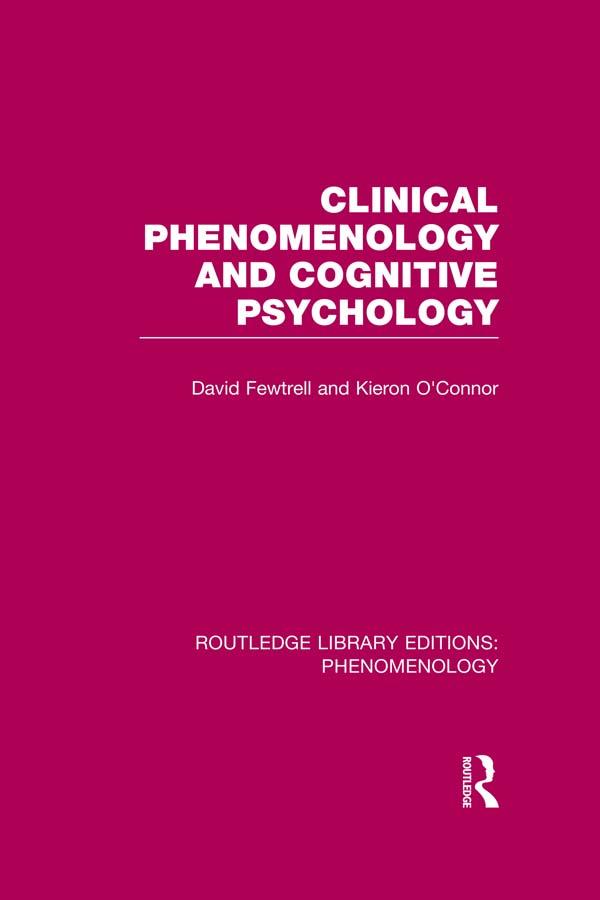
Cognitive therapies are often biased in their assessment of clinical problems by their emphasis on the role of verbally-mediated thought in shaping our emotions, and in stressing the influence of thought upon feeling. Alternatively, a more phenomenological appraisal of psychological dysfunction suggests that emotion and thinking are complementary processes which influence each other.
Cognitive psychology developed out of information-processing models, whereas phenomenological psychology is rooted in a philosophical perspective which avoids the assumptions of positivist methodology. But, despite their different origins, the two disciplines overlap and complement each other. This book, originally published in 1995, illustrates how feeling states are a crucial component of mental health problems and, if adequately differentiated, can result in a greater understanding of mental health.
Maksa helposti kortilla, Klarnalla, Apple Paylla tai Google Paylla. Etkö ole tyytyväinen? Sinulla on aina 14 päivän palautusoikeus. Lue lisää ehdoistamme. Jos sinulla on kysyttävää, lähetä meille sähköpostia osoitteeseen hello@memmo.org.
Memmo tekee opiskelusta helpompaa – missä päin maailmaa ikinä oletkin. Meillä yhdistät kurssikirjat ja fiksut opiskelutyökalut yhteen paikkaan: tiivistelmät, visat, podcastit ja muistikortit. Ja sitten Ted, opiskelukaverisi, joka vastaa kaikkeen, mitä ikinä mietitkin. Yli 50 000 opiskelijaa opiskelee jo täällä – rakennettu auttamaan sinua oppimaan nopeammin ja stressaamaan vähemmän.