
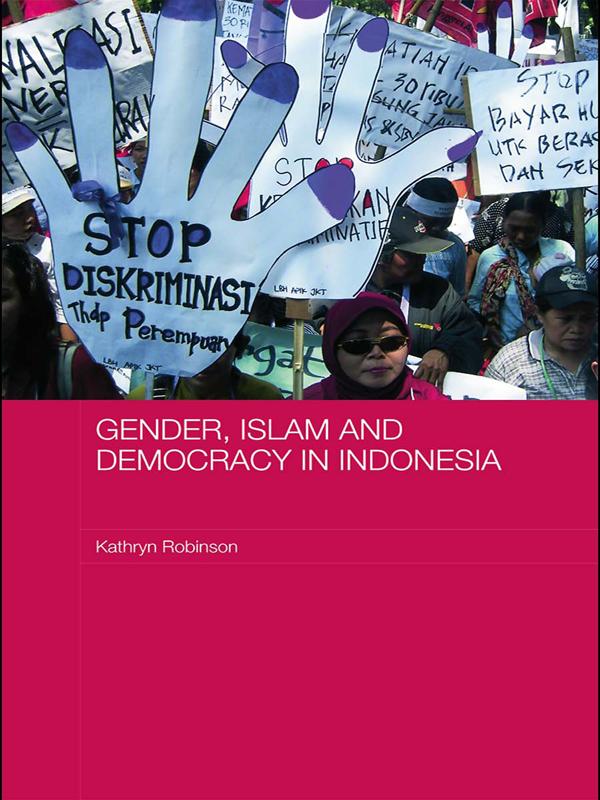
This book explores the relationship between gender, religion and political action in Indonesia, examining the patterns of gender orders that have prevailed in recent history, and demonstrating the different forms of social power this has afforded to women. It sets out the part played by women in the nationalist movement, and the role of the women’s movement in the structuring of the independent Indonesian state, the politics of the immediate post-independence period and the transition to the authoritarian New Order. It analyses in detail the gender relations of the New Order regime, focused around the unitary family form supposed by the family system expounded in the New Order ideology and the contradictory implications of the opening up of the economy to foreign capital and ideas, for gender relations. It examines the forms of political activism that were possible for the women’s movement under the New Order, and the role it played in the fall of Suharto and the transition to democracy. The relationship between Islam and women in Indonesia is also addressed, with particular focus on the way in which Islam became a critical focus for political dissent in the late New Order period. Overall, this book provides a thorough investigation of the relationship between gender, religion and democracy in Indonesia, and is a vital resource for students of gender studies and Indonesian affairs.
Maksa helposti kortilla, Klarnalla, Apple Paylla tai Google Paylla. Etkö ole tyytyväinen? Sinulla on aina 14 päivän palautusoikeus. Lue lisää ehdoistamme. Jos sinulla on kysyttävää, lähetä meille sähköpostia osoitteeseen hello@memmo.org.
Memmo tekee opiskelusta helpompaa – missä päin maailmaa ikinä oletkin. Meillä yhdistät kurssikirjat ja fiksut opiskelutyökalut yhteen paikkaan: tiivistelmät, visat, podcastit ja muistikortit. Ja sitten Ted, opiskelukaverisi, joka vastaa kaikkeen, mitä ikinä mietitkin. Yli 50 000 opiskelijaa opiskelee jo täällä – rakennettu auttamaan sinua oppimaan nopeammin ja stressaamaan vähemmän.