
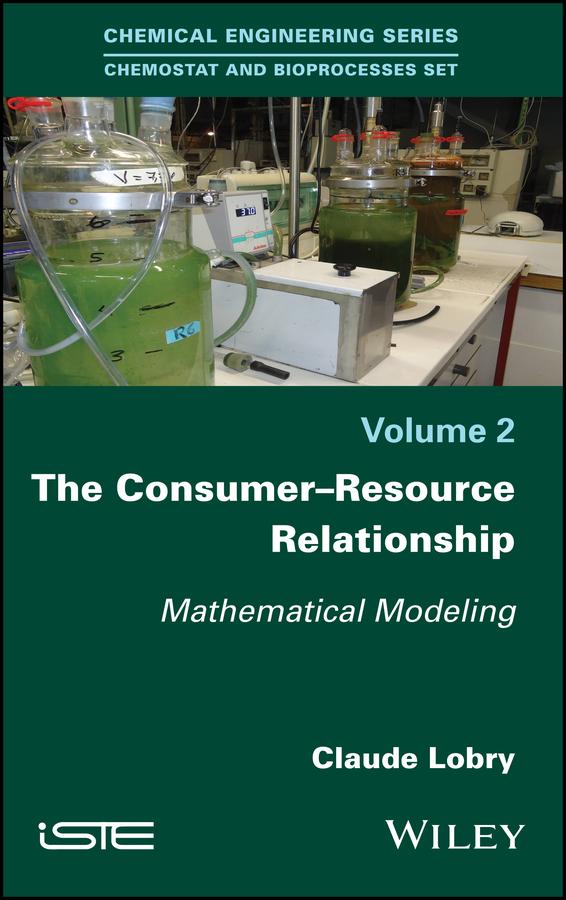
Better known as the "predator-prey relationship," the consumer-resource relationship means the situation where a single species of organisms consumes for survival and reproduction. For example, Escherichia coli consumes glucose, cows consume grass, cheetahs consume baboons; these three very different situations, the first concerns the world of bacteria and the resource is a chemical species, the second concerns mammals and the resource is a plant, and in the final case the consumer and the resource are mammals, have in common the fact of consuming.
In a chemostat, microorganisms generally consume (abiotic) minerals, but not always, bacteriophages consume bacteria that constitute a biotic resource. 'The Chemostat' book dealt only with the case of abiotic resources. Mathematically this amounts to replacing in the two equation system of the chemostat the decreasing function by a general increasing then decreasing function. This simple change has greatly enriched the theory. This book shows in this new framework the problem of competition for the same resource.
Maksa helposti kortilla, Klarnalla, Apple Paylla tai Google Paylla. Etkö ole tyytyväinen? Sinulla on aina 14 päivän palautusoikeus. Lue lisää ehdoistamme. Jos sinulla on kysyttävää, lähetä meille sähköpostia osoitteeseen hello@memmo.org.
Memmo tekee opiskelusta helpompaa – missä päin maailmaa ikinä oletkin. Meillä yhdistät kurssikirjat ja fiksut opiskelutyökalut yhteen paikkaan: tiivistelmät, visat, podcastit ja muistikortit. Ja sitten Ted, opiskelukaverisi, joka vastaa kaikkeen, mitä ikinä mietitkin. Yli 50 000 opiskelijaa opiskelee jo täällä – rakennettu auttamaan sinua oppimaan nopeammin ja stressaamaan vähemmän.