
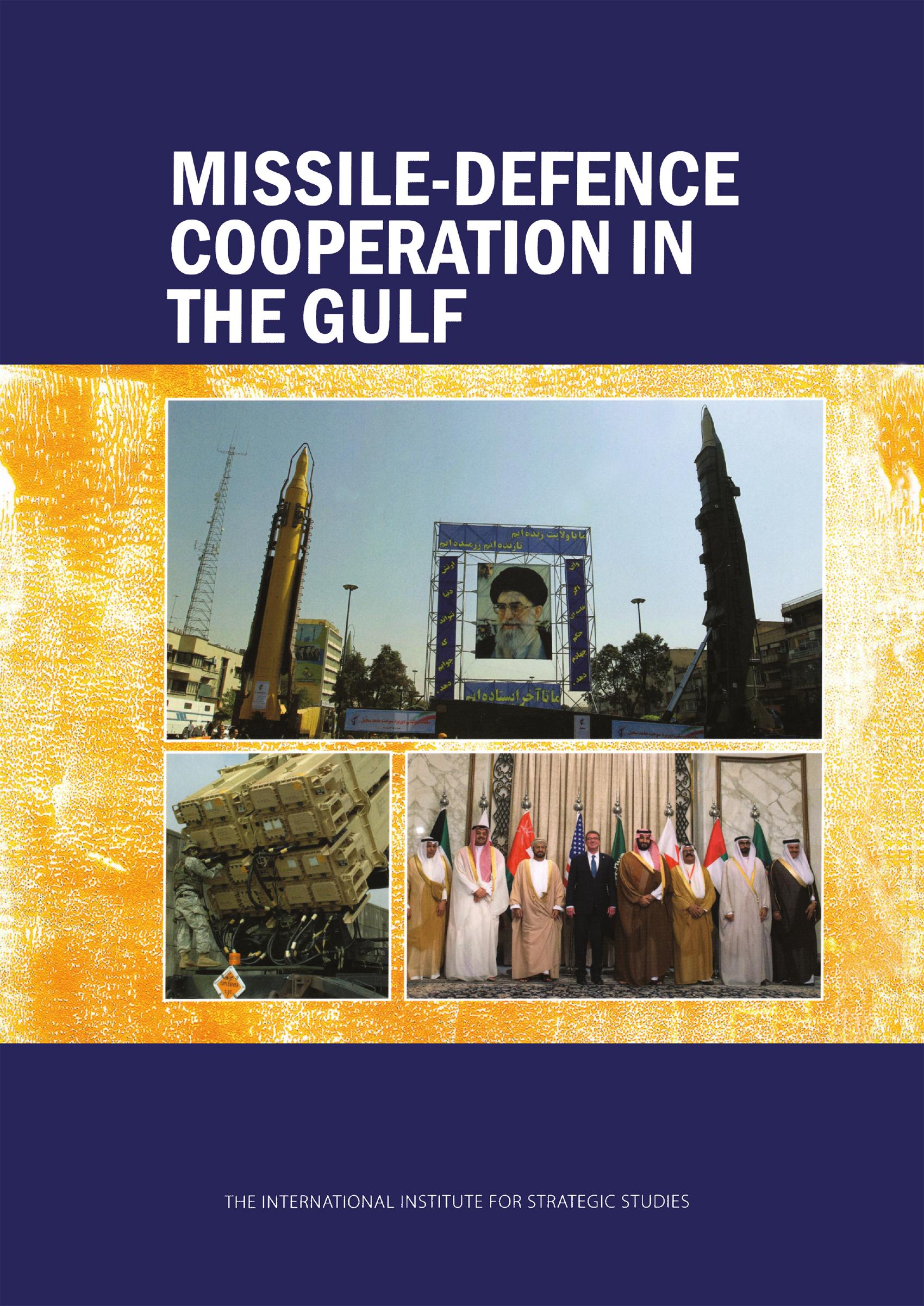
Iran’s short- and medium-range ballistic missiles are instrumental to its military doctrine and deterrence strategy. Yet despite having long faced a direct threat from these missiles, the members of the Gulf Cooperation Council remain unable or unwilling to effectively coordinate and integrate their missile-defence capabilities. They have gained a measure of protection through bilateral procurement of technology and expertise from the United States. But a more strategically efficient approach would be to pool resources such as radars and other sensors, and to integrate their systems in ways that require difficult compromises between state sovereignty and security.
Written by a team of IISS experts, Missile-Defence Cooperation in the Gulf contributes to the ongoing policy debate on Middle Eastern collective security. The report examines the development of Iran’s missile capabilities over several decades, parallel efforts to counter the threat they pose by Gulf Arab states and the broader evolution of security structures in the region. It is a valuable resource for policymakers, scholars and government officials seeking to understand the ‘security complex’ that encompasses all states in the Gulf, and that shapes their decisions on politically sensitive issues of missile defence.
Maksa helposti kortilla, Klarnalla, Apple Paylla tai Google Paylla. Etkö ole tyytyväinen? Sinulla on aina 14 päivän palautusoikeus. Lue lisää ehdoistamme. Jos sinulla on kysyttävää, lähetä meille sähköpostia osoitteeseen hello@memmo.org.
Memmo tekee opiskelusta helpompaa – missä päin maailmaa ikinä oletkin. Meillä yhdistät kurssikirjat ja fiksut opiskelutyökalut yhteen paikkaan: tiivistelmät, visat, podcastit ja muistikortit. Ja sitten Ted, opiskelukaverisi, joka vastaa kaikkeen, mitä ikinä mietitkin. Yli 50 000 opiskelijaa opiskelee jo täällä – rakennettu auttamaan sinua oppimaan nopeammin ja stressaamaan vähemmän.