
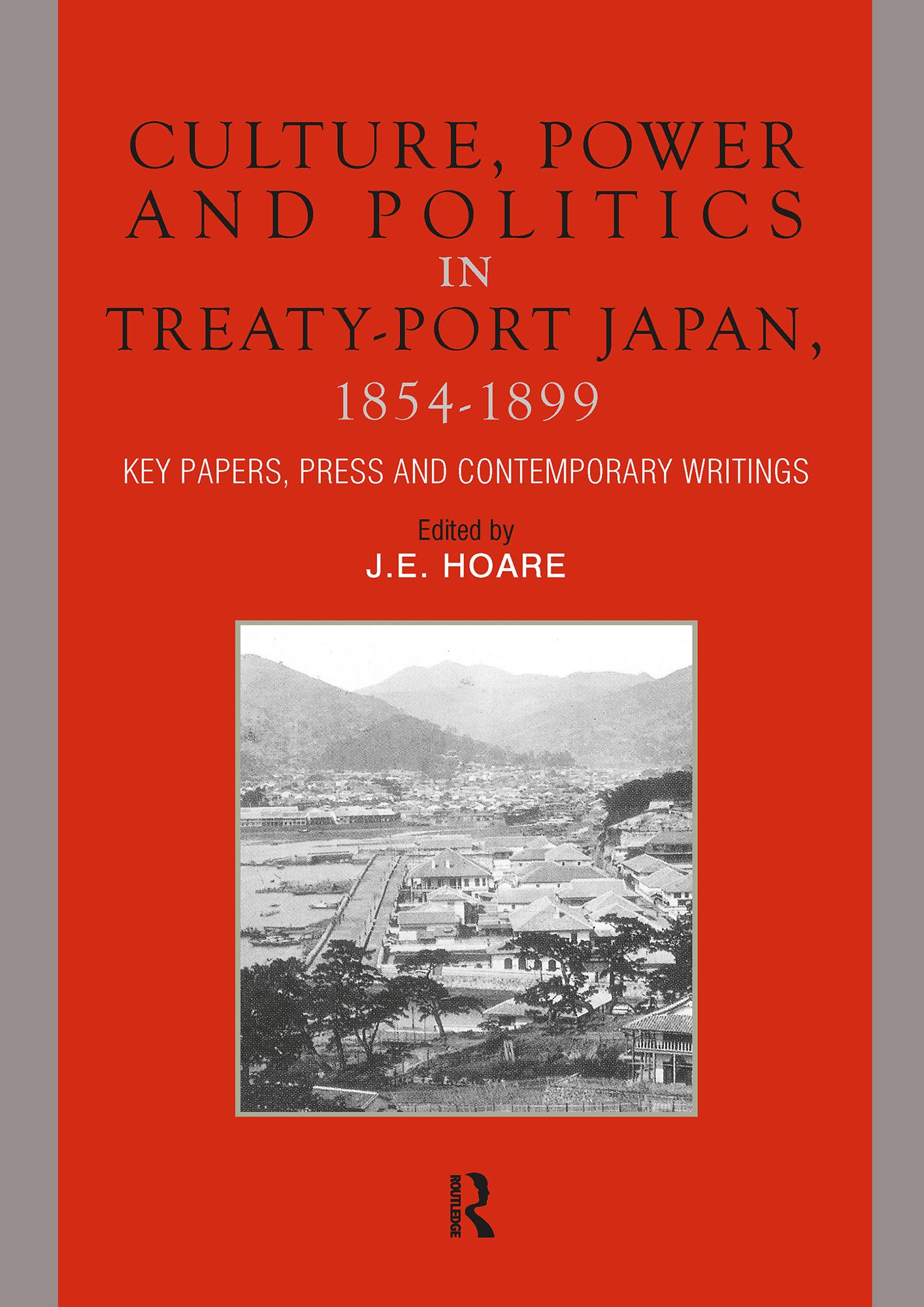
This two–volume collection, supported by an in-depth introduction that addresses origins, actuality, endgame and afterlife, brings together for the first time contemporary documentation and more recent scholarship to give a broad picture of Japan’s Treaty Ports and their inhabitants at work and play in the second half of the nineteenth century. The material selected, shows how the ports’ existence and the Japanese struggle to end their special status, impacted on many aspects of modern Japan beyond their primary role as trading stations. Compared with their counterparts in China, the Japanese treaty ports cast a small shadow. They were far fewer – only four really mattered – and lasted for just under fifty years, while the Chinese ports made their centenary. Yet the Japanese ports were important. The thriving modern cities of Yokohama and Kobe had their origins as treaty ports. Nagasaki, a major centre of foreign trade since at least the sixteenth century, may not have owed so much to its treaty-port status, but it was a factor in its modern development.
Maksa helposti kortilla, Klarnalla, Apple Paylla tai Google Paylla. Etkö ole tyytyväinen? Sinulla on aina 14 päivän palautusoikeus. Lue lisää ehdoistamme. Jos sinulla on kysyttävää, lähetä meille sähköpostia osoitteeseen hello@memmo.org.
Memmo tekee opiskelusta helpompaa – missä päin maailmaa ikinä oletkin. Meillä yhdistät kurssikirjat ja fiksut opiskelutyökalut yhteen paikkaan: tiivistelmät, visat, podcastit ja muistikortit. Ja sitten Ted, opiskelukaverisi, joka vastaa kaikkeen, mitä ikinä mietitkin. Yli 50 000 opiskelijaa opiskelee jo täällä – rakennettu auttamaan sinua oppimaan nopeammin ja stressaamaan vähemmän.
Saatat pitää myös näistä
Osta kirja0