
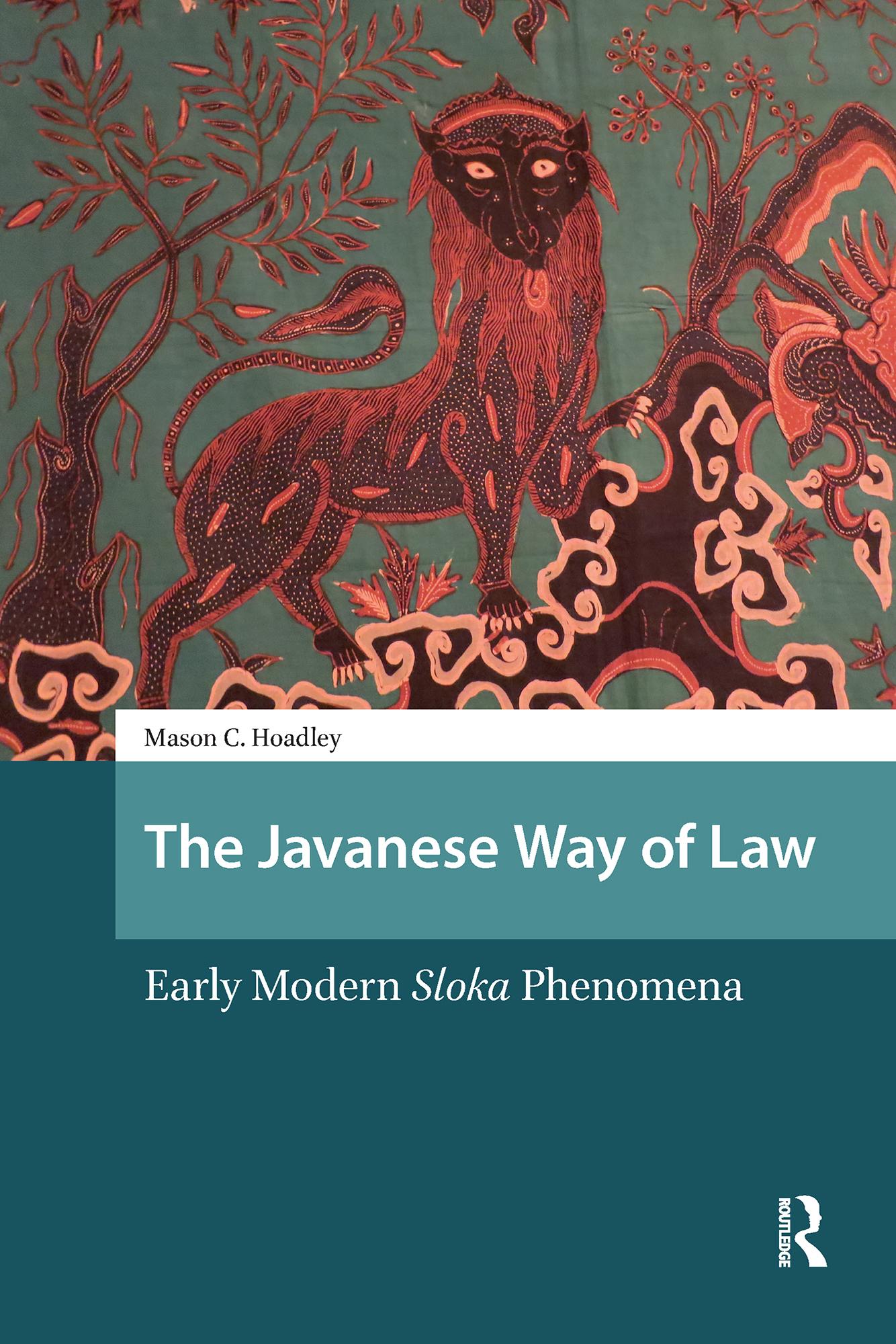
The author's investigation of early-modern Javanese law reveals that judicial authority does not come from the contents of legal titles or juridical texts, but from legal maxims and variations thereof. A century and a half ago Simon Keyzer, a recognized scholar of Javanese law, noted that understanding of that law is dependent upon a grasp of such pithy expressions, which provide the key to the whole body of suits. (Preface, C.F. Winter, Javaansche Zamenspraken, 1858, which examines hundreds of sloka, the majority of which are directed to prevailing legal practice). Drawing upon the contents of 18th century Javanese legal texts, the present work builds upon Keyzer's and Winter's references to 'sloka-phenomena', namely sloka proper (maxims) and its derivatives sinalokan (that made of sloka), aksara here meaning legal principles, and prakara (matter, case). These are usually conveyed in vignettes illustrating their function and as a group, constitute the essence of traditional Javanese written law.
Maksa helposti kortilla, Klarnalla, Apple Paylla tai Google Paylla. Etkö ole tyytyväinen? Sinulla on aina 14 päivän palautusoikeus. Lue lisää ehdoistamme. Jos sinulla on kysyttävää, lähetä meille sähköpostia osoitteeseen hello@memmo.org.
Memmo tekee opiskelusta helpompaa – missä päin maailmaa ikinä oletkin. Meillä yhdistät kurssikirjat ja fiksut opiskelutyökalut yhteen paikkaan: tiivistelmät, visat, podcastit ja muistikortit. Ja sitten Ted, opiskelukaverisi, joka vastaa kaikkeen, mitä ikinä mietitkin. Yli 50 000 opiskelijaa opiskelee jo täällä – rakennettu auttamaan sinua oppimaan nopeammin ja stressaamaan vähemmän.