
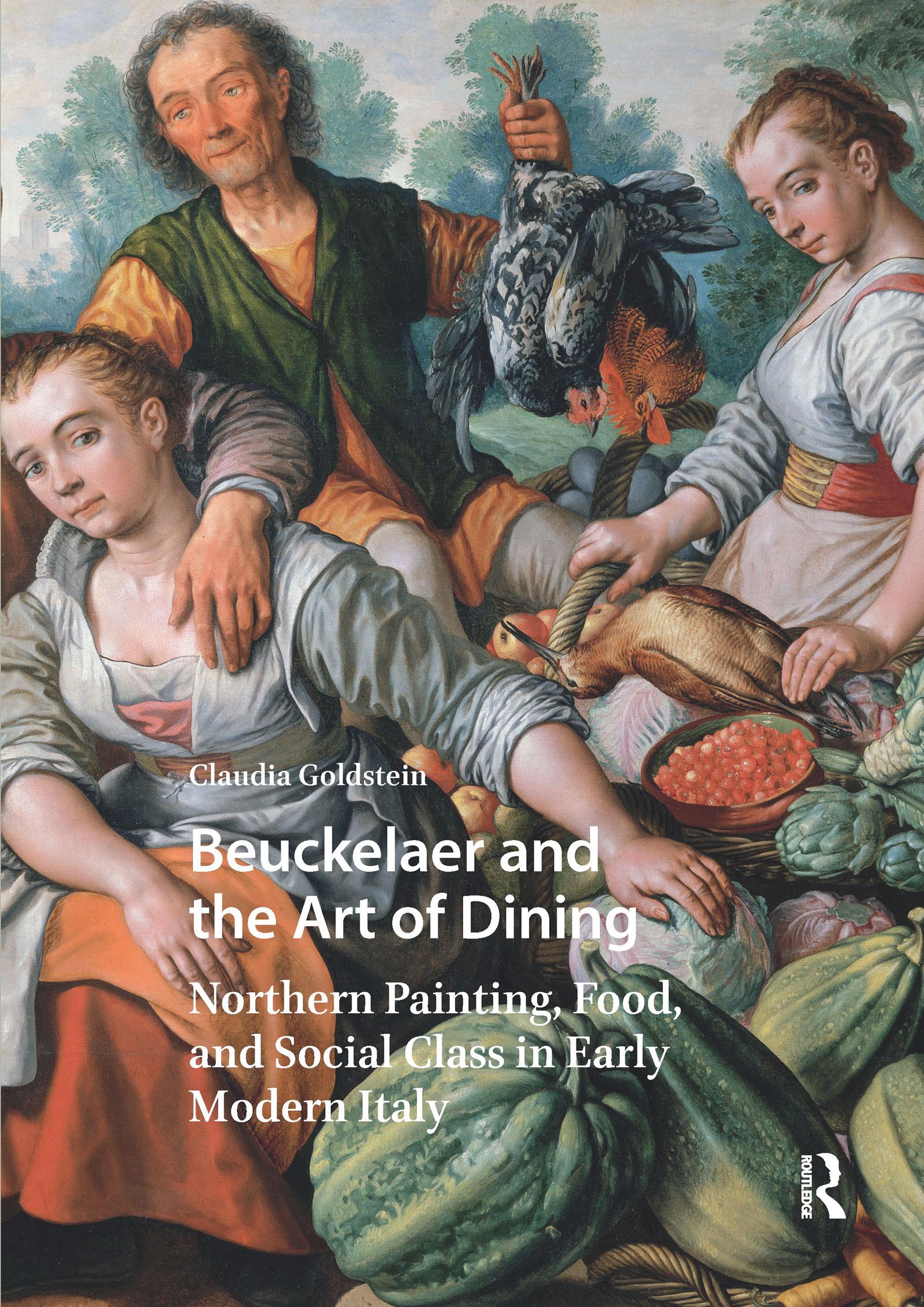
Sixteenth-century Flemish painter Joachim Beuckelaer produced dozens of large-scale paintings of contemporary working women and men selling, presenting, and preparing a visually stunning array of foodstuffs for the viewer. These were new subjects in Antwerp and even newer in Italy, where elite merchants and nobles like Margaret of Parma displayed them as they were meant to be displayed: in dining rooms and spaces used for entertaining. This study explores the cross-cultural meanings of Beuckelaer's distinctly Northern European kitchen and market scenes in the context of North Italian dining and food culture. Examining the functions of Beuckelaer's strange and new subject matter, Goldstein situates his paintings and those of his closest Italian follower, Vincenzo Campi, in the physical space of the dining room, addressing dining practice and the class and gender tensions inherent in a setting that placed both elite and non-elite viewers before life-sized renderings of their employees, and themselves.
Maksa helposti kortilla, Klarnalla, Apple Paylla tai Google Paylla. Etkö ole tyytyväinen? Sinulla on aina 14 päivän palautusoikeus. Lue lisää ehdoistamme. Jos sinulla on kysyttävää, lähetä meille sähköpostia osoitteeseen hello@memmo.org.
Memmo tekee opiskelusta helpompaa – missä päin maailmaa ikinä oletkin. Meillä yhdistät kurssikirjat ja fiksut opiskelutyökalut yhteen paikkaan: tiivistelmät, visat, podcastit ja muistikortit. Ja sitten Ted, opiskelukaverisi, joka vastaa kaikkeen, mitä ikinä mietitkin. Yli 50 000 opiskelijaa opiskelee jo täällä – rakennettu auttamaan sinua oppimaan nopeammin ja stressaamaan vähemmän.
Saatat pitää myös näistä
Osta kirja0