
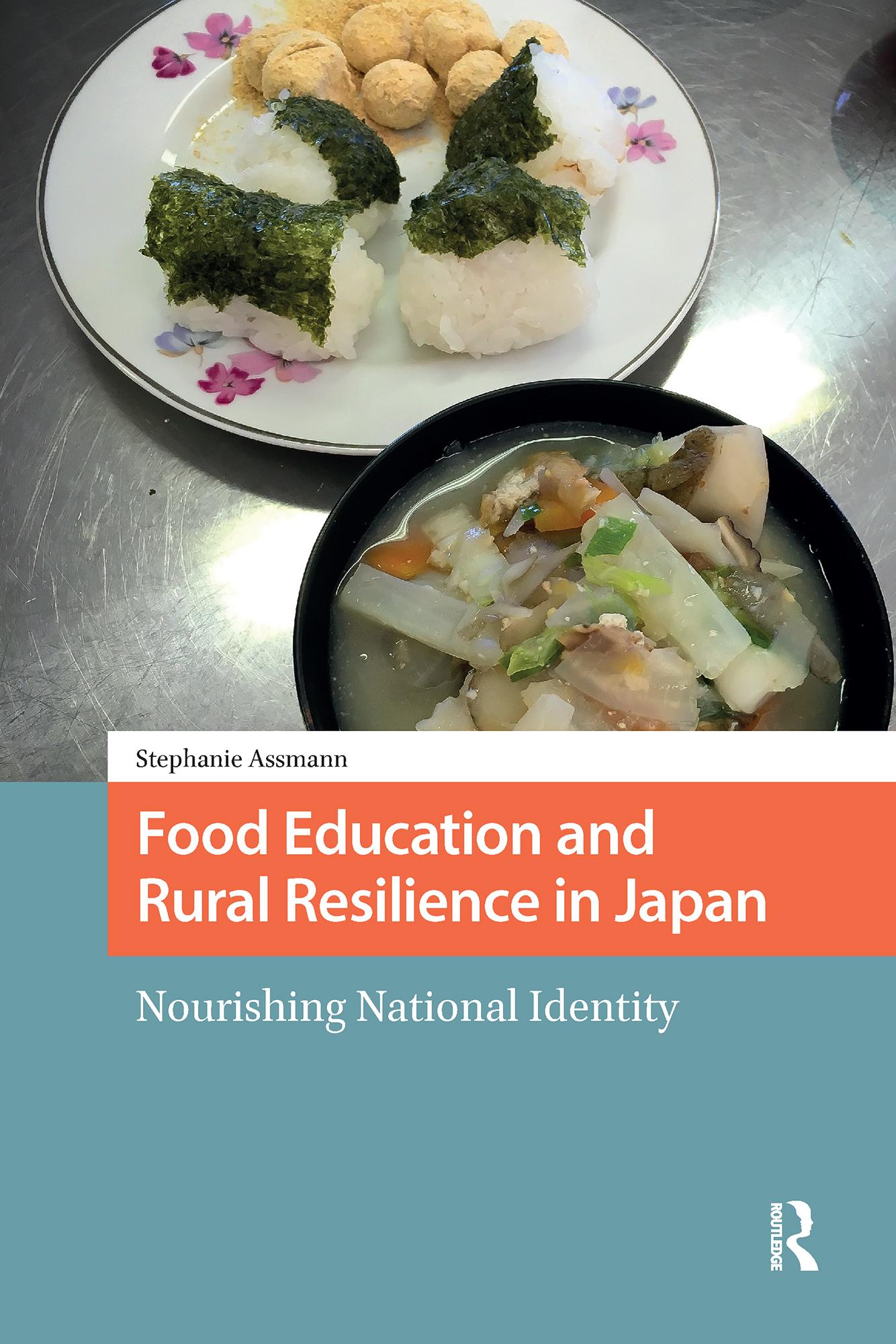
Food education initiatives exist worldwide, but Japan remains unique with its food education law known as shokuiku. The country’s impressive health metrics — high life expectancies, low obesity, and affordable health care — often lead observers to praise this approach. This book presents a more nuanced analysis. First, it challenges the assumption that food education is wholly a “good thing” by exposing underlying power mechanisms. Through food diagrams, food fairs, and school lunch programs, government ministries promote both nationalism and traditional gender roles. Second, it explores how food education operates in Japan’s rural regions, where educators champion resilience and food self-sufficiency to alleviate depopulation and economic decline. This emphasis on local food persisted even in the aftermath of the 2011 Fukushima nuclear disaster. Using Foucault’s concept of governmentality, historical contextualization, and extensive fieldwork in rural Japan, this study reveals the complex political agenda driving food education in a non-Western society.
Maksa helposti kortilla, Klarnalla, Apple Paylla tai Google Paylla. Etkö ole tyytyväinen? Sinulla on aina 14 päivän palautusoikeus. Lue lisää ehdoistamme. Jos sinulla on kysyttävää, lähetä meille sähköpostia osoitteeseen hello@memmo.org.
Memmo tekee opiskelusta helpompaa – missä päin maailmaa ikinä oletkin. Meillä yhdistät kurssikirjat ja fiksut opiskelutyökalut yhteen paikkaan: tiivistelmät, visat, podcastit ja muistikortit. Ja sitten Ted, opiskelukaverisi, joka vastaa kaikkeen, mitä ikinä mietitkin. Yli 50 000 opiskelijaa opiskelee jo täällä – rakennettu auttamaan sinua oppimaan nopeammin ja stressaamaan vähemmän.