
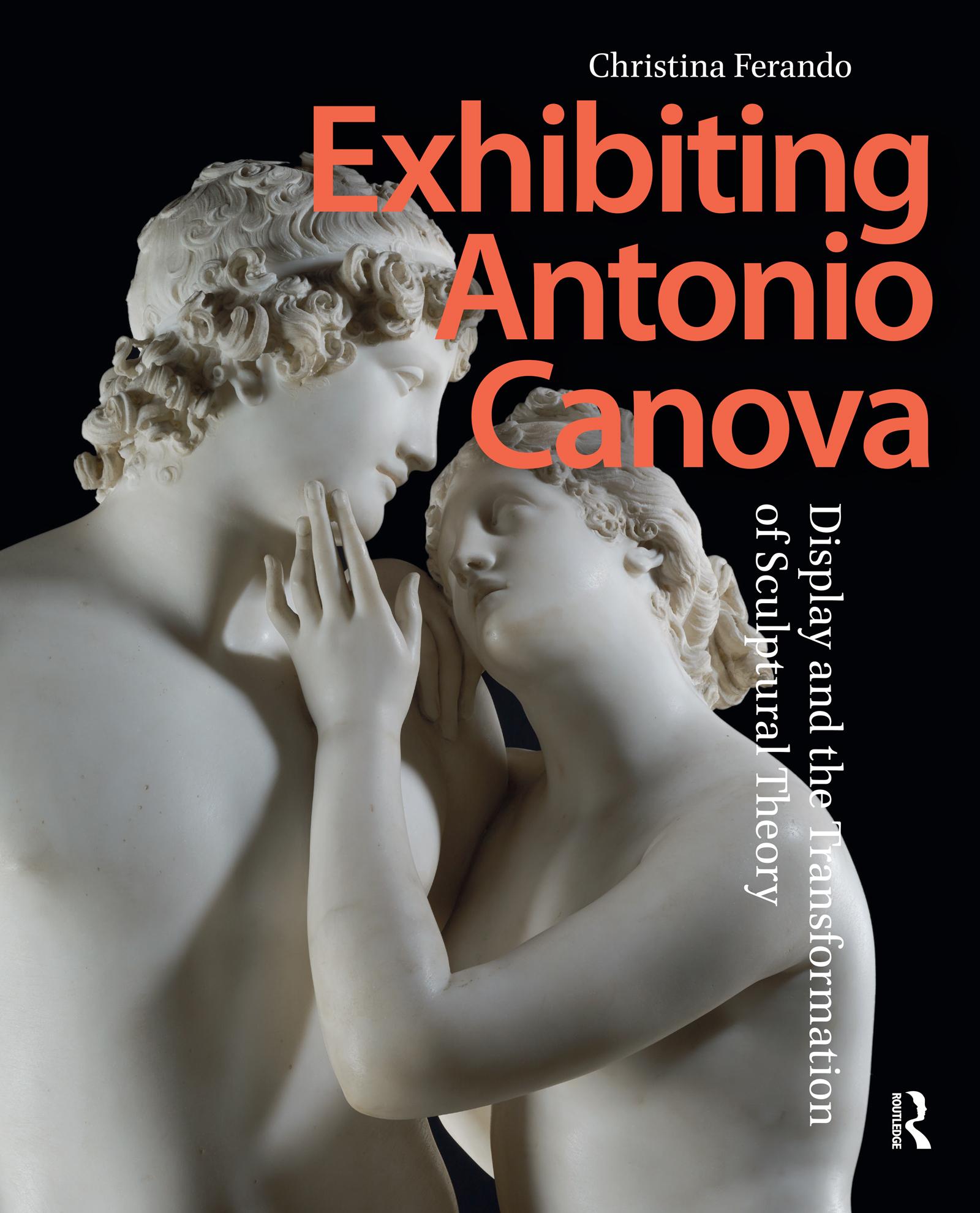
Exhibiting Antonio Canova: Display and the Transformation of Sculptural Theory argues that the display of Canova’s sculptures in the late eighteenth and early nineteenth centuries acted as a catalyst for discourse across a broad range of subjects. By enshrining his marble figures alongside plaster casts of ancient works, bathing them in candlelight, staining and waxing their surfaces, and even setting them in motion on rotating bases, Canova engaged viewers intellectually, physically, and emotionally. These displays inspired discussions on topics as diverse as originality and artistic production, the association between the sculptural surface, flesh, and anatomy, the relationship between painting and sculpture, and the role of public museums. Beholders’ discussions also shaped the legacy of important sculptural theories. They helped usher in their modern definitions and created the lenses through which we experience and interpret works of art, establishing modern attitudes not just towards sculpture, but towards cultural patrimony in general.
Maksa helposti kortilla, Klarnalla, Apple Paylla tai Google Paylla. Etkö ole tyytyväinen? Sinulla on aina 14 päivän palautusoikeus. Lue lisää ehdoistamme. Jos sinulla on kysyttävää, lähetä meille sähköpostia osoitteeseen hello@memmo.org.
Memmo tekee opiskelusta helpompaa – missä päin maailmaa ikinä oletkin. Meillä yhdistät kurssikirjat ja fiksut opiskelutyökalut yhteen paikkaan: tiivistelmät, visat, podcastit ja muistikortit. Ja sitten Ted, opiskelukaverisi, joka vastaa kaikkeen, mitä ikinä mietitkin. Yli 50 000 opiskelijaa opiskelee jo täällä – rakennettu auttamaan sinua oppimaan nopeammin ja stressaamaan vähemmän.