
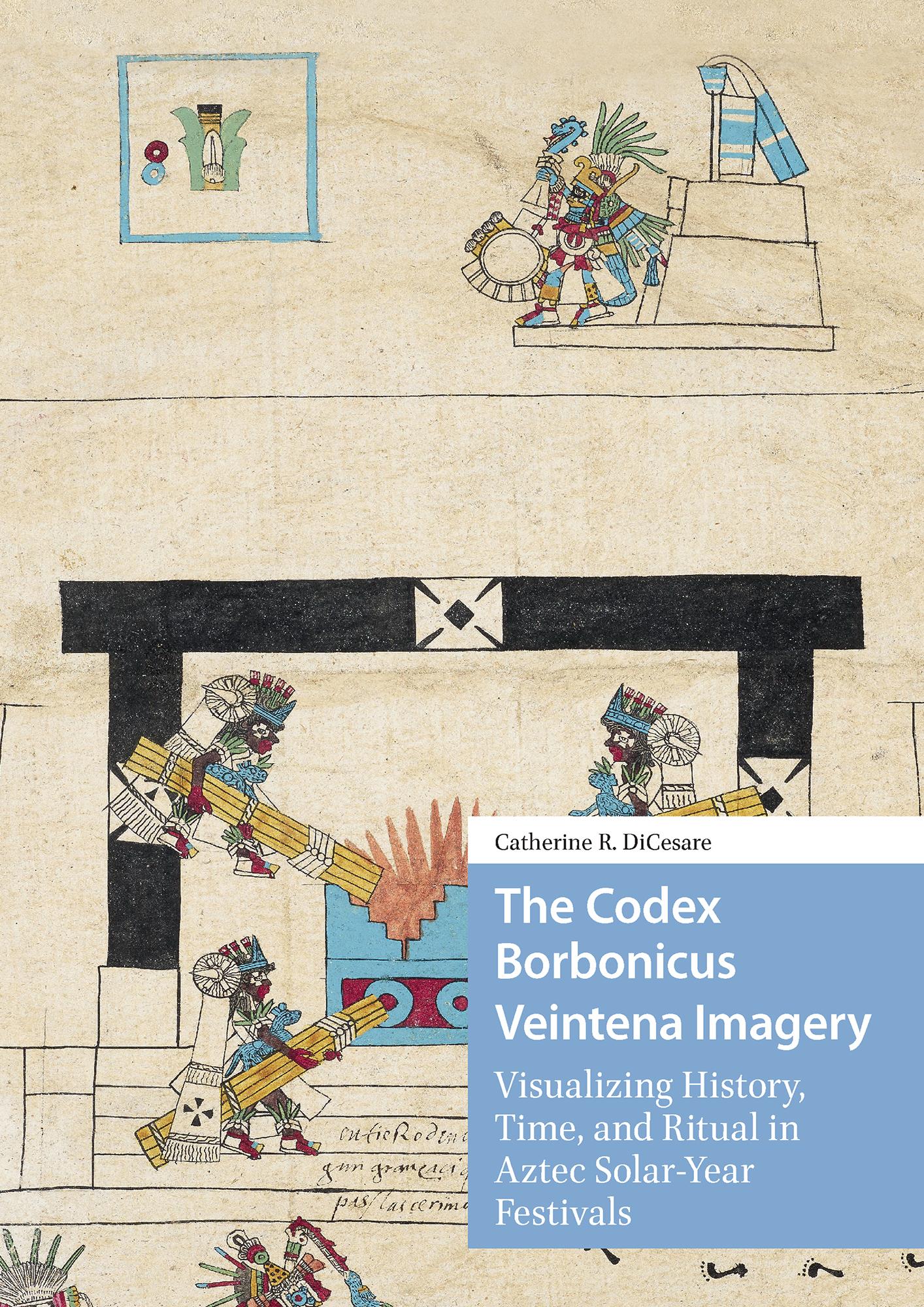
The sixteenth-century pictorial manuscript known as the Codex Borbonicus contains a remarkable record of the eighteen Mexica (or “Aztec”) festival periods of twenty days, known as veintenas, celebrated during the 365-day solar year. Because its indigenous artists framed the Borbonicus veintenas with historical year dates, this volume situates the annually recurring rituals within the march of linear, reckoned time, in the singular year “2 Reed” (1507), during the reign of Moteuczoma II. DiCesare attends to the historical dimensions of several unusual scenes, proposing that the veintenas probably varied significantly from year to year in response to historical concerns. She considers particularly whether the Borbonicus veintenas document the confluence of solar year ceremonies with a second set of ritual feast days, governed by the 260-day cycle known as the tonalpohualli, or “count of days.” In this way, DiCesare analyzes how linear and cyclical conceptions of time intersected in Mexica ritual performance.
Maksa helposti kortilla, Klarnalla, Apple Paylla tai Google Paylla. Etkö ole tyytyväinen? Sinulla on aina 14 päivän palautusoikeus. Lue lisää ehdoistamme. Jos sinulla on kysyttävää, lähetä meille sähköpostia osoitteeseen hello@memmo.org.
Memmo tekee opiskelusta helpompaa – missä päin maailmaa ikinä oletkin. Meillä yhdistät kurssikirjat ja fiksut opiskelutyökalut yhteen paikkaan: tiivistelmät, visat, podcastit ja muistikortit. Ja sitten Ted, opiskelukaverisi, joka vastaa kaikkeen, mitä ikinä mietitkin. Yli 50 000 opiskelijaa opiskelee jo täällä – rakennettu auttamaan sinua oppimaan nopeammin ja stressaamaan vähemmän.
Saatat pitää myös näistä
Osta kirja0