
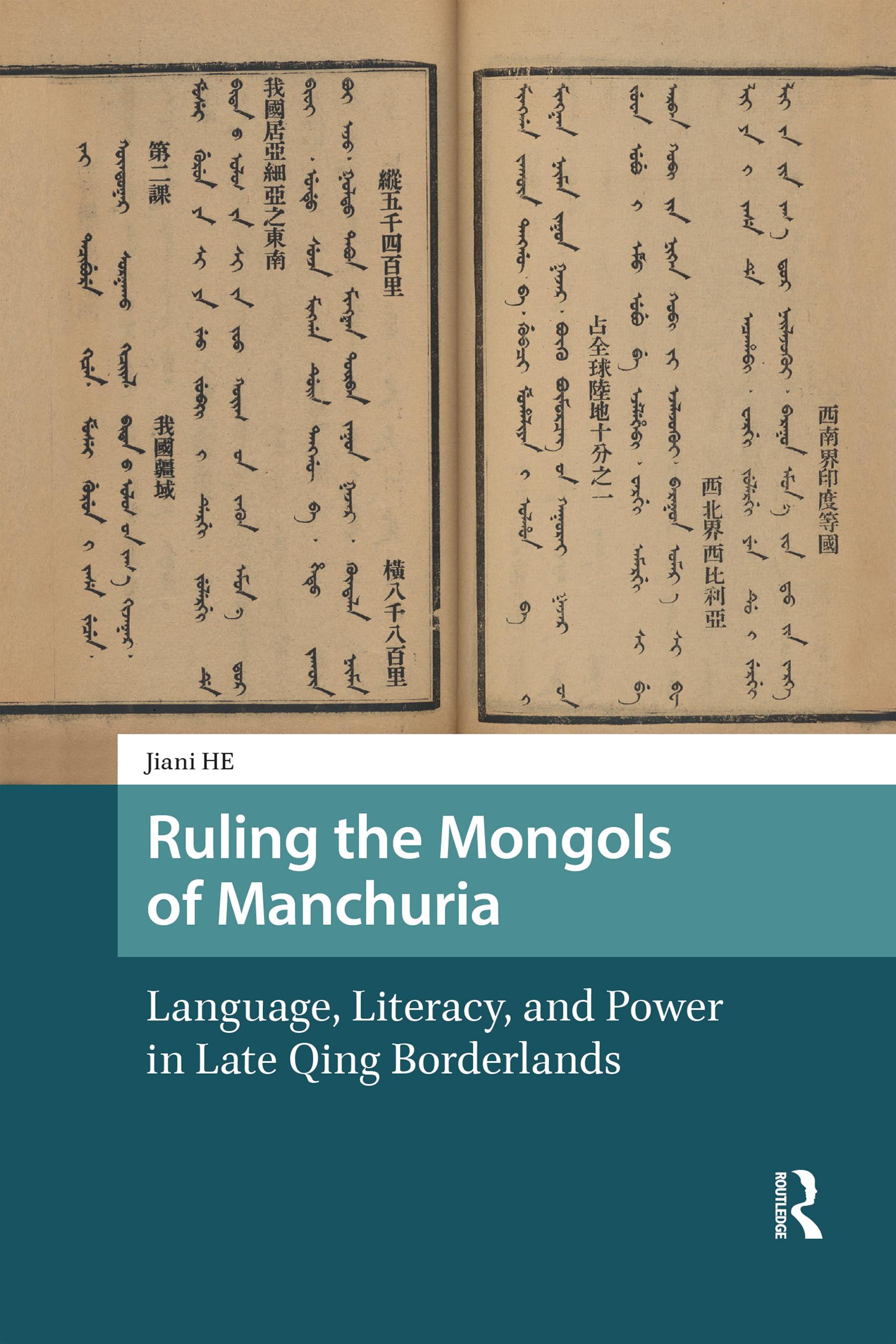
At the turn of the twentieth century, the Jirim League witnessed a linguistic struggle between Manchu, Mongol, Chinese, Japanese, and Russian powers. The Qing Empire envisioned a trilingual educational system, with the aim of improving the Jirim Mongols’ ability to read Chinese, Manchu, and Mongolian. Through this policy, the Qing sought to transform loyal imperial subjects into modern patriotic nationals and incorporate them into an integrated and united China under a Manchu constitutional monarchy. The late Qing’s language policy and strategy for ruling the Mongols of Manchuria was an attempt to address the enduring multilingual legacies in Qing administration and people’s everyday life, growing local ethnic tensions, cross-boundary connections, imperial rivalries, and the rise of new ideas concerning nation, modern state, and international relations in East Asia. This book challenges the notion of Chinese language reform as a story of linear progression towards national monolingualism, highlights the power of multilingualism in Chinese nationalist discourse from a peripheral, non-Han Chinese perspective, and questions the extent to which national languages dominate the writing of history.
Maksa helposti kortilla, Klarnalla, Apple Paylla tai Google Paylla. Etkö ole tyytyväinen? Sinulla on aina 14 päivän palautusoikeus. Lue lisää ehdoistamme. Jos sinulla on kysyttävää, lähetä meille sähköpostia osoitteeseen hello@memmo.org.
Memmo tekee opiskelusta helpompaa – missä päin maailmaa ikinä oletkin. Meillä yhdistät kurssikirjat ja fiksut opiskelutyökalut yhteen paikkaan: tiivistelmät, visat, podcastit ja muistikortit. Ja sitten Ted, opiskelukaverisi, joka vastaa kaikkeen, mitä ikinä mietitkin. Yli 50 000 opiskelijaa opiskelee jo täällä – rakennettu auttamaan sinua oppimaan nopeammin ja stressaamaan vähemmän.
Saatat pitää myös näistä
Osta kirja0