
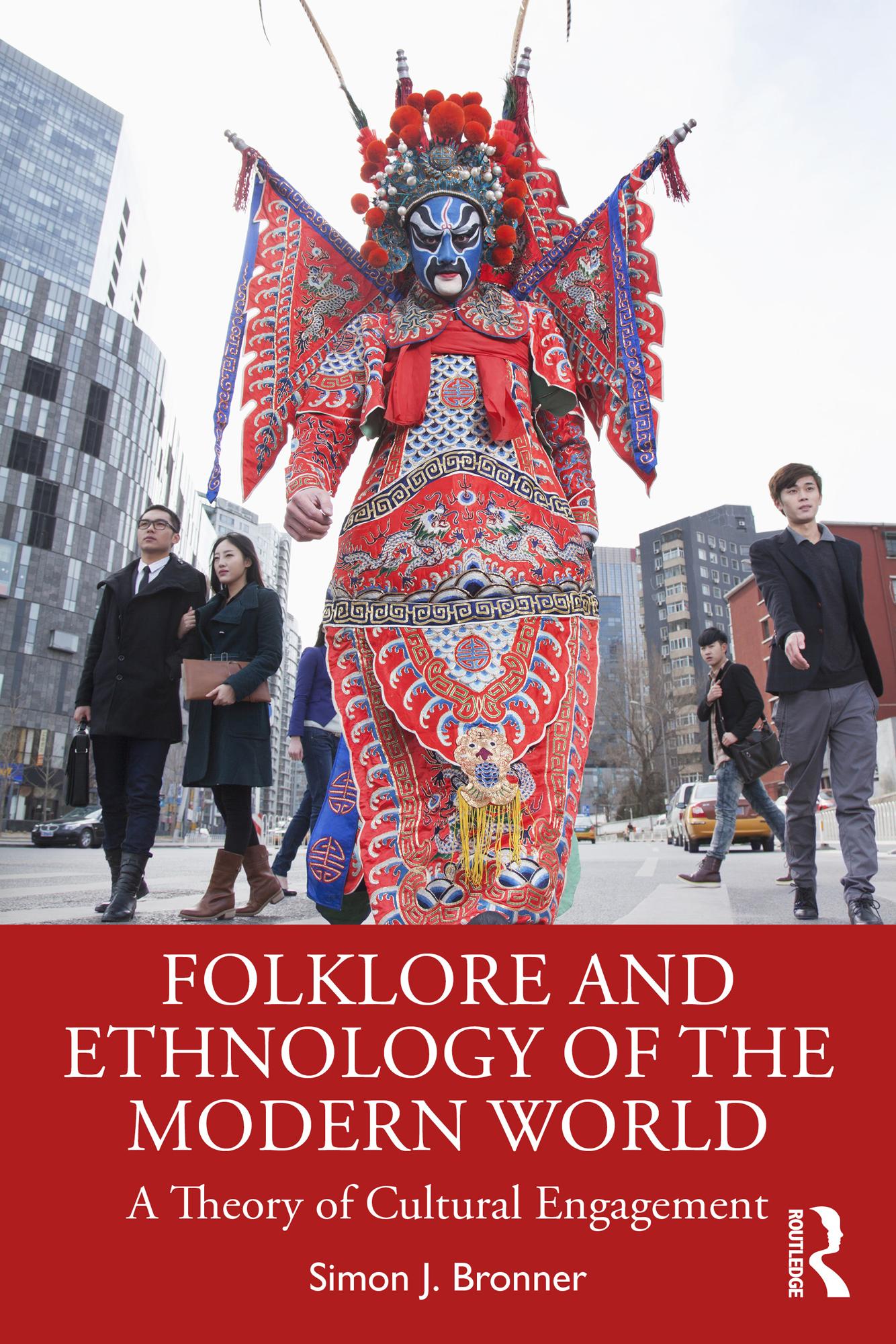
In Folklore and Ethnology of the Modern World, Simon Bronner identifies “cultural engagements” that people use to reconcile tradition and modernity and confront the anxieties of the present by bringing together the past, often represented by tradition, and the immediate digital, unreal future. These socially bounded, symbol-laden practices integrate ritual, play, narrative, and object with the instrumental purpose of confronting paradoxes and tensions of modern life. They provide the basis for a theory of how people cope culturally with change that appears to be outside of their control.
Bronner explains the social and psychological complexities of cultural engagements with case studies from different parts of the world connected by their often politicized clash between tradition and modernity. The book explains the growth of strongman contests invoking mythology, the evolving meaning of Chinese puzzle balls, the responses to suppression of naval hazing traditions in Europe and America, the ubiquitous infusion of magical thinking into email practices, the “meme diplomacy” in the border wars between India and Pakistan and the projection of conflict onto cricket matches, and the global implications of the rise of “algorithmic folklore” in an AI future.
This clear and accessible book is an essential read for anyone approaching the ethnological study of folklore and its interaction with modern society and culture.
Maksa helposti kortilla, Klarnalla, Apple Paylla tai Google Paylla. Etkö ole tyytyväinen? Sinulla on aina 14 päivän palautusoikeus. Lue lisää ehdoistamme. Jos sinulla on kysyttävää, lähetä meille sähköpostia osoitteeseen hello@memmo.org.
Memmo tekee opiskelusta helpompaa – missä päin maailmaa ikinä oletkin. Meillä yhdistät kurssikirjat ja fiksut opiskelutyökalut yhteen paikkaan: tiivistelmät, visat, podcastit ja muistikortit. Ja sitten Ted, opiskelukaverisi, joka vastaa kaikkeen, mitä ikinä mietitkin. Yli 50 000 opiskelijaa opiskelee jo täällä – rakennettu auttamaan sinua oppimaan nopeammin ja stressaamaan vähemmän.