
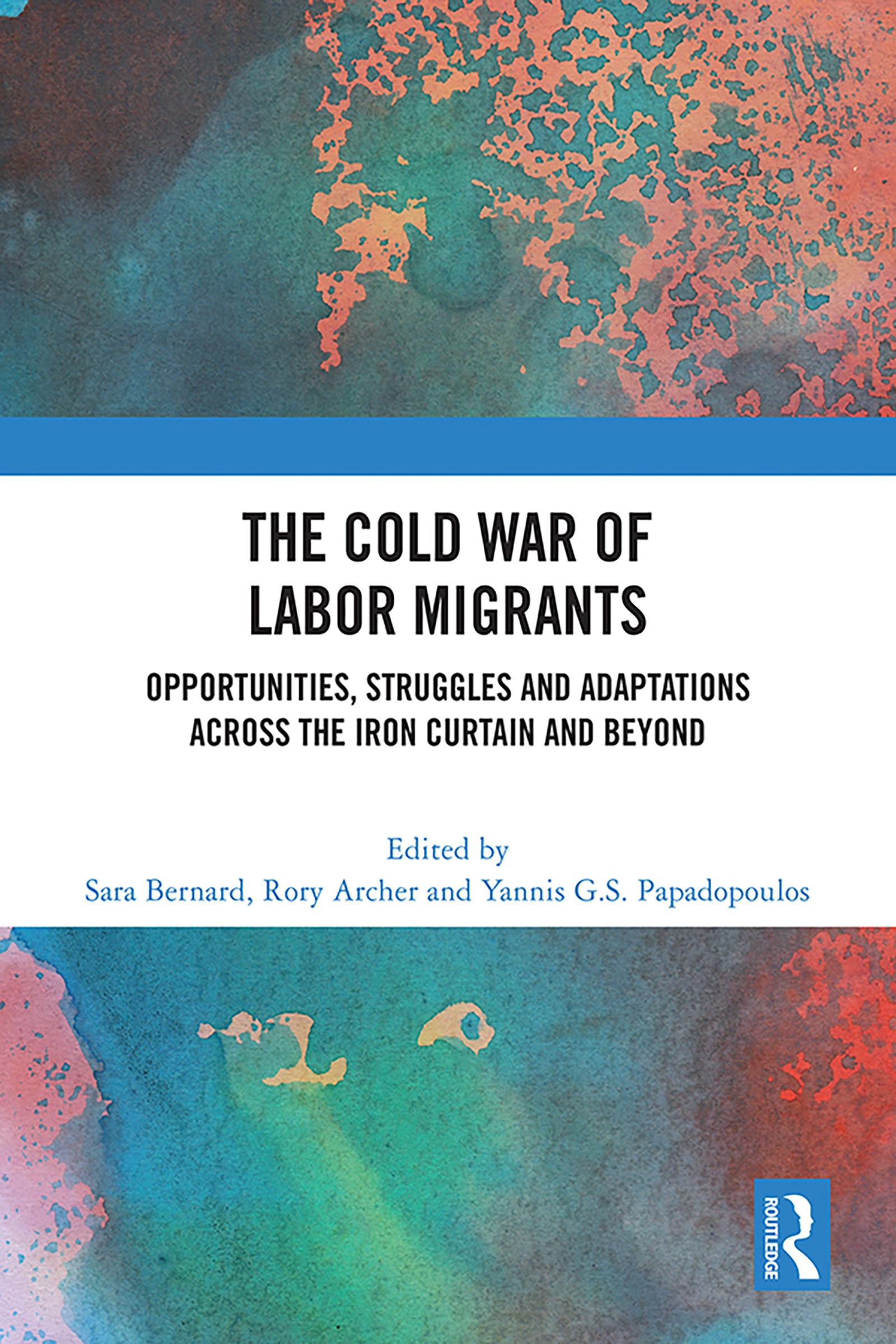
This book challenges conventional wisdom about labor migration during the Cold War era, revealing a complex landscape of mobility that transcended the supposed rigid boundaries between socialist and capitalist worlds.
Drawing on rich case studies from the Soviet Union, Eastern Europe, Western Europe, and Yugoslavia, the contributors demonstrate how the Cold War’s unique socioeconomic and political context fostered unexpected experimentation and adaptation in labor mobility policies and practices. Rather than a simple story of restriction versus freedom, this collection reveals how institutional actors across both blocs functioned as agents of globalization, navigating a terrain where competition and collaboration often coexisted.
By examining labor migration as both lived experience and state- regulated phenomenon, this volume makes a vital contribution to our understanding of how Cold War rivalries shaped human mobility within and across ideological divides. The research presented here underscores the importance of integrating both Western and non- Western perspectives when assessing the history and enduring legacy of international labor migration during this pivotal period. This book is an essential resource for scholars of migration studies, Cold War history, labor economics, and global politics.
The chapters in this book were originally published in Labor History.
Maksa helposti kortilla, Klarnalla, Apple Paylla tai Google Paylla. Etkö ole tyytyväinen? Sinulla on aina 14 päivän palautusoikeus. Lue lisää ehdoistamme. Jos sinulla on kysyttävää, lähetä meille sähköpostia osoitteeseen hello@memmo.org.
Memmo tekee opiskelusta helpompaa – missä päin maailmaa ikinä oletkin. Meillä yhdistät kurssikirjat ja fiksut opiskelutyökalut yhteen paikkaan: tiivistelmät, visat, podcastit ja muistikortit. Ja sitten Ted, opiskelukaverisi, joka vastaa kaikkeen, mitä ikinä mietitkin. Yli 50 000 opiskelijaa opiskelee jo täällä – rakennettu auttamaan sinua oppimaan nopeammin ja stressaamaan vähemmän.