
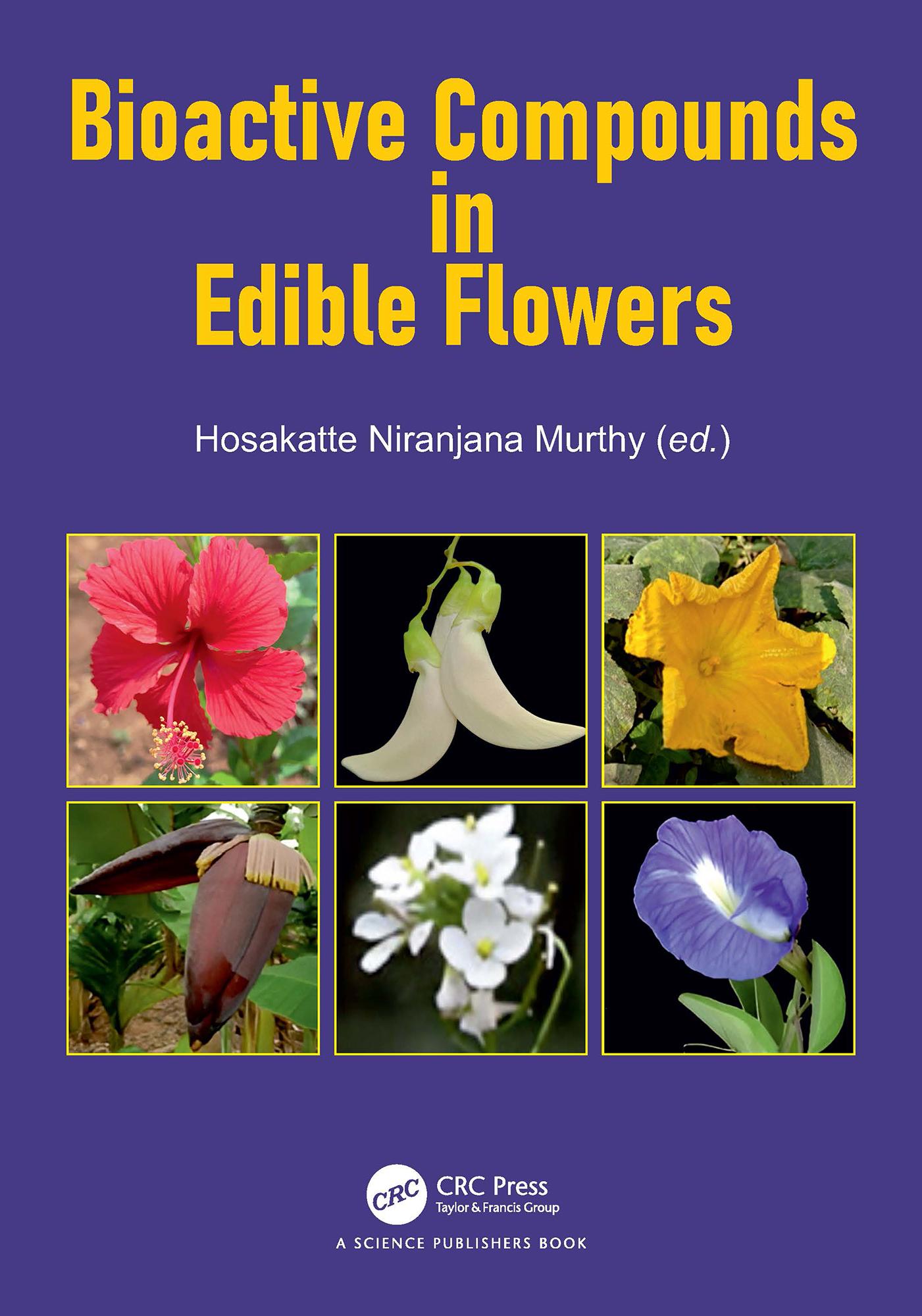
Many societies have found various utilities of edible flowers. They give a more ornamental look, enhances the taste, and also enhances its nutritional value. Numerous studies conducted recently have shown that edible flowers are also rich in nutrients such as carbohydrates, proteins, fats, fibre, vitamins, minerals. These flowers also contain a variety of phytochemicals, including phenolics, flavonoids, carotenoids, terpenoids, alkaloids, and other compounds that have been shown to increase biological activities, such as antioxidant, antimicrobial and antidiabetic, anticancer, cardioprotective, hepatoprotective, and neuroprotective qualities. Edible flowers have now found their way into a number of industries, including as cosmeceuticals, functional foods, and nutraceuticals.
The book provides information on the nutritional value, phytochemical makeup, and bioactivity of both wild and cultivated flowers. It also describes edible flowers in depth to make them better-known to consumers and the food business. Each chapter discusses the possible toxicological effects of floral components.
Maksa helposti kortilla, Klarnalla, Apple Paylla tai Google Paylla. Etkö ole tyytyväinen? Sinulla on aina 14 päivän palautusoikeus. Lue lisää ehdoistamme. Jos sinulla on kysyttävää, lähetä meille sähköpostia osoitteeseen hello@memmo.org.
Memmo tekee opiskelusta helpompaa – missä päin maailmaa ikinä oletkin. Meillä yhdistät kurssikirjat ja fiksut opiskelutyökalut yhteen paikkaan: tiivistelmät, visat, podcastit ja muistikortit. Ja sitten Ted, opiskelukaverisi, joka vastaa kaikkeen, mitä ikinä mietitkin. Yli 50 000 opiskelijaa opiskelee jo täällä – rakennettu auttamaan sinua oppimaan nopeammin ja stressaamaan vähemmän.