
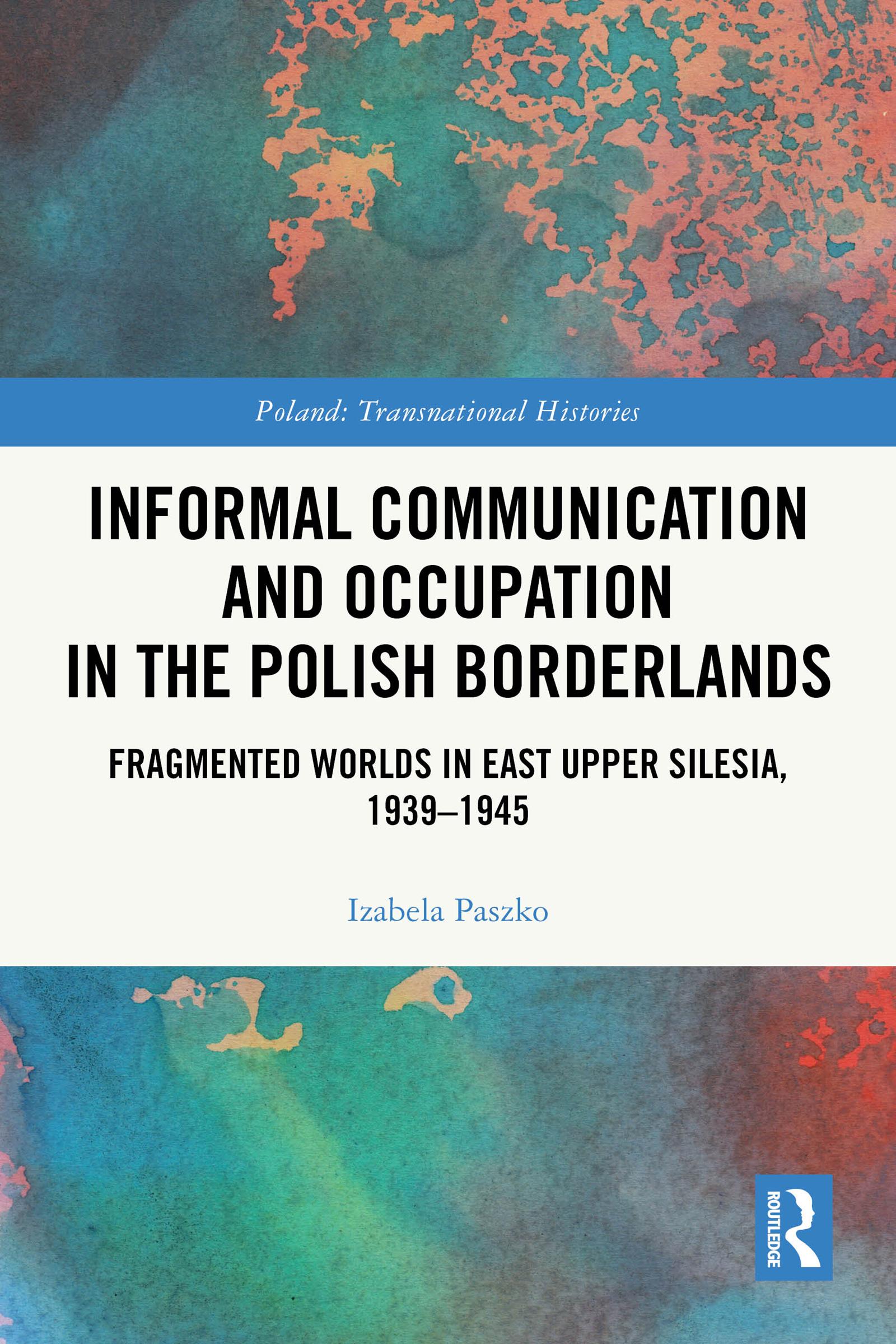
The book explores the neglected role and social dynamics of informal communication – interpersonal channels not controlled ‘from above’ – in the region of Upper Silesia under the German occupation during the Second World War (1939–1945).
Whereas the classic dichotomies, such as private-public and formal-informal, have been widely explored and discussed in the humanities, the main focus of this volume lies in the reconstruction of the information landscape of wartime and its deployment by families, co-workers, neighbours, and other social groups. Through the prism of personal stories, the book analyses functions and forms of informal communication that existed in a contextual and ephemeral way such as gossip, rumours, and workers’ conversations, offering an interdisciplinary perspective on everyday life during this period.
Informal Communication and Occupation in the Polish Borderlands is primarily aimed at scholars of contemporary history, social history, and Eastern European history, while its important lens as a study of fake news and misinformation in modern times will also be engaging to undergraduate classrooms and general readers.
Maksa helposti kortilla, Klarnalla, Apple Paylla tai Google Paylla. Etkö ole tyytyväinen? Sinulla on aina 14 päivän palautusoikeus. Lue lisää ehdoistamme. Jos sinulla on kysyttävää, lähetä meille sähköpostia osoitteeseen hello@memmo.org.
Memmo tekee opiskelusta helpompaa – missä päin maailmaa ikinä oletkin. Meillä yhdistät kurssikirjat ja fiksut opiskelutyökalut yhteen paikkaan: tiivistelmät, visat, podcastit ja muistikortit. Ja sitten Ted, opiskelukaverisi, joka vastaa kaikkeen, mitä ikinä mietitkin. Yli 50 000 opiskelijaa opiskelee jo täällä – rakennettu auttamaan sinua oppimaan nopeammin ja stressaamaan vähemmän.