
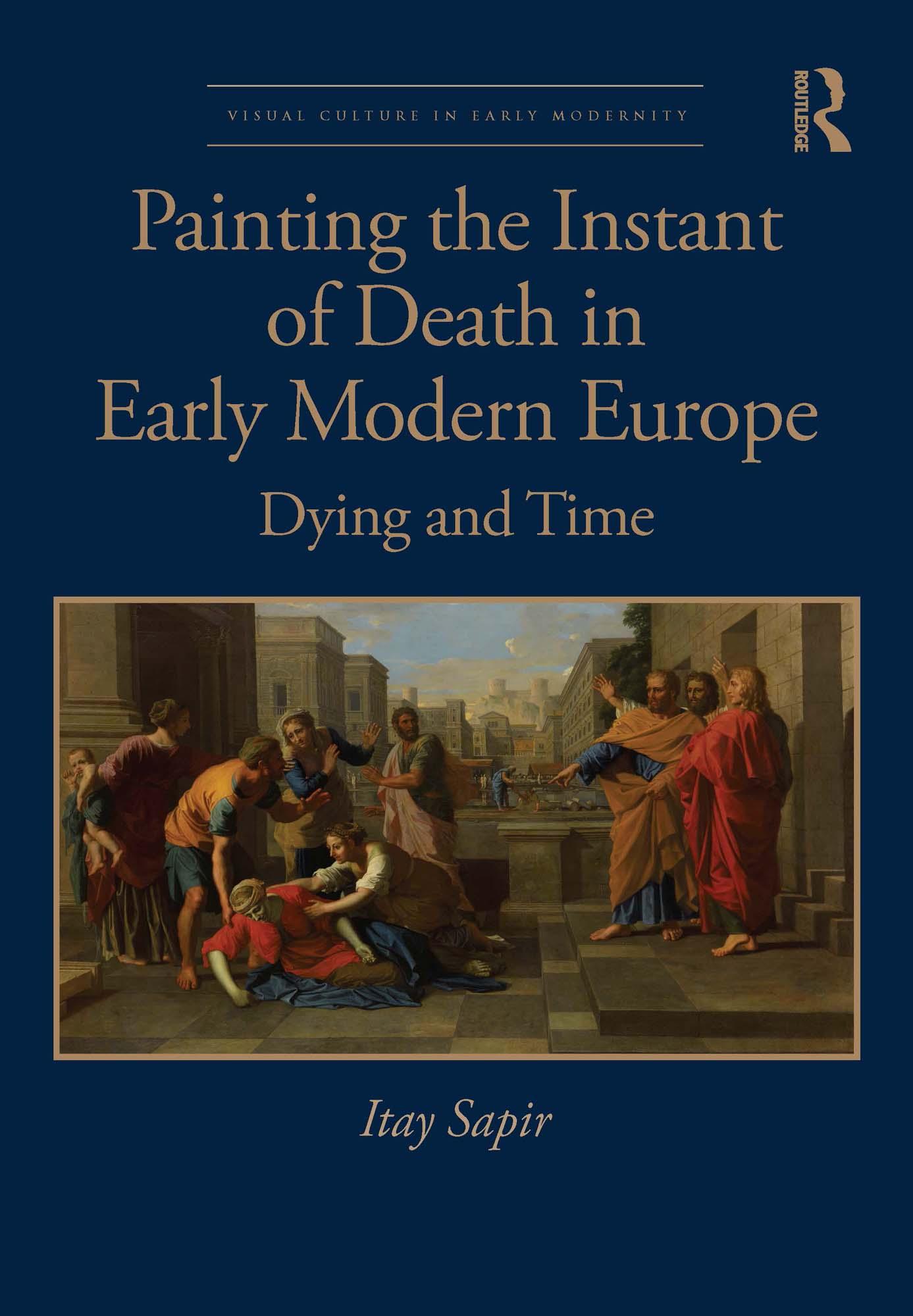
This volume traces the evolution of the pictorial representation – and, more often than not, the visual effacement – of the instant of death in Europe between the Renaissance and the middle of the seventeenth century.
Chapters show how artistic choices tackling the visual depiction of “death events” (i.e. death taking place, as opposed to the long processes of agony on the one hand and mourning on the other) are manifestations of theoretical, philosophical, and anthropological issues as crucial to early modern culture as they are today. This book discusses the very concept of an instant and its aporias; the more specific question (both philosophical and biological) of death, its definitions and its temporality; and the vast art-theoretical issues around painting and its fraught relation with time, liveliness, and the inanimate. Among the artists discussed are Caravaggio, Rubens, Poussin, Ribera, Artemisia Gentileschi, Michelangelo, Rosso Fiorentino, and Piero della Francesca.
This book will be of interest to scholars working in art history, Renaissance and Baroque studies, and death studies.
Maksa helposti kortilla, Klarnalla, Apple Paylla tai Google Paylla. Etkö ole tyytyväinen? Sinulla on aina 14 päivän palautusoikeus. Lue lisää ehdoistamme. Jos sinulla on kysyttävää, lähetä meille sähköpostia osoitteeseen hello@memmo.org.
Memmo tekee opiskelusta helpompaa – missä päin maailmaa ikinä oletkin. Meillä yhdistät kurssikirjat ja fiksut opiskelutyökalut yhteen paikkaan: tiivistelmät, visat, podcastit ja muistikortit. Ja sitten Ted, opiskelukaverisi, joka vastaa kaikkeen, mitä ikinä mietitkin. Yli 50 000 opiskelijaa opiskelee jo täällä – rakennettu auttamaan sinua oppimaan nopeammin ja stressaamaan vähemmän.