
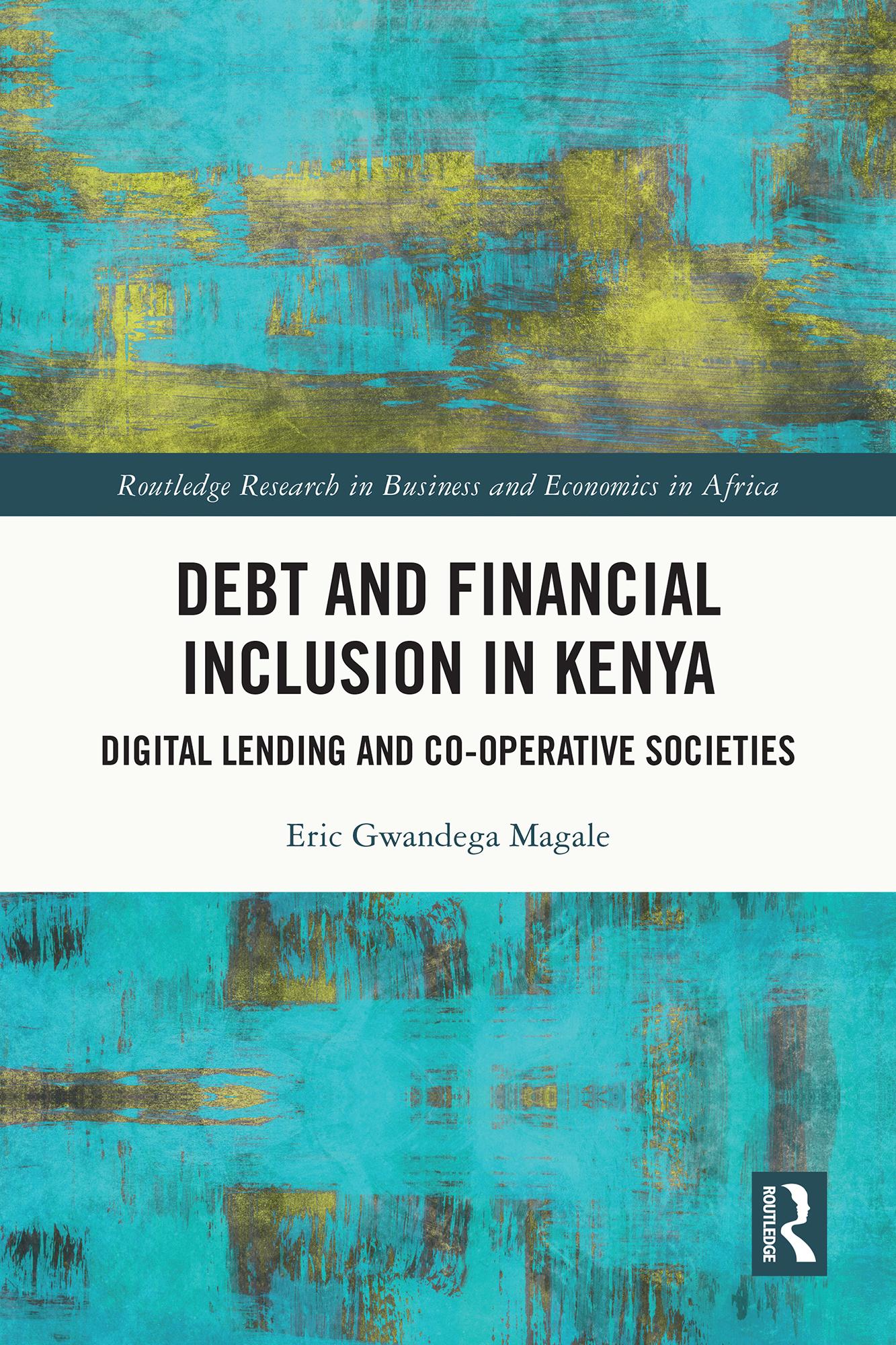
What is the relationship of the people of Kenya to credit and debt? Exploring two increasingly popular financial services providers, digital lenders, and cooperative societies, Debt and Financial Inclusion in Kenya identifies fundamental flaws in financial inclusion strategies deployed in Kenya and their ability to alleviate poverty.
Co-operatives have long been important institutions for low- to middle-income Kenyans, long before the financial inclusion discourse came about. But it was the advent of mobile money in 2008 that transformed Kenya’s financial services industry tremendously and saw different fintech innovations built on the M-Pesa platform. In the last decade or so, there has been a digital credit boom in Kenya with institutions of different kinds, and more recently the government offering microloans to millions of Kenyans, arguing that that credit has the potential to help the poor forge their paths out of poverty. Based on extensive original research, this book examines how digital lenders and Savings and Credit Co-operative Societies (SACCOs) go about extending credit, and how borrowers experience this. The book shows that digital credit is an important component of a Kenyan’s credit mix. However, the use of digital credit varies greatly between people who occupy different income classes. For the poor, who are the targets of financial inclusion, these loans often take the form of ‘bad credit’ which compromises their financial health, leaving them overindebted. The book explains the ways in which the current monetary system does not work for the poor, arguing that true financial inclusion can only be achieved via a fundamental rethinking of the money system.
Exposing important problems of speculative profiteering and the financialization of the poor, Debt and Financial Inclusion in Kenya will be an important read for researchers of finance, banking, and development in Africa.
Maksa helposti kortilla, Klarnalla, Apple Paylla tai Google Paylla. Etkö ole tyytyväinen? Sinulla on aina 14 päivän palautusoikeus. Lue lisää ehdoistamme. Jos sinulla on kysyttävää, lähetä meille sähköpostia osoitteeseen hello@memmo.org.
Memmo tekee opiskelusta helpompaa – missä päin maailmaa ikinä oletkin. Meillä yhdistät kurssikirjat ja fiksut opiskelutyökalut yhteen paikkaan: tiivistelmät, visat, podcastit ja muistikortit. Ja sitten Ted, opiskelukaverisi, joka vastaa kaikkeen, mitä ikinä mietitkin. Yli 50 000 opiskelijaa opiskelee jo täällä – rakennettu auttamaan sinua oppimaan nopeammin ja stressaamaan vähemmän.