
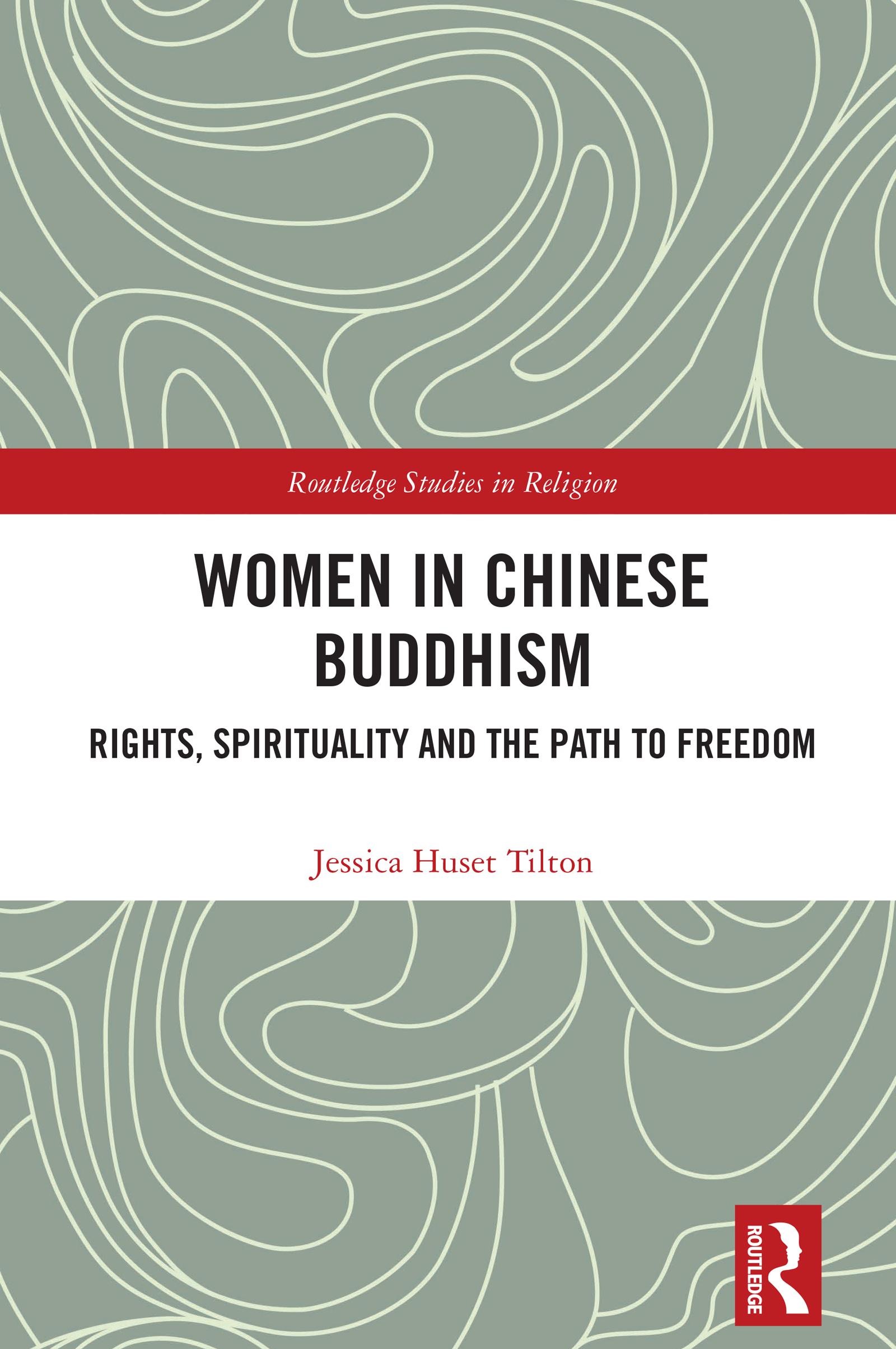
Tilton examines how cultural, political and economic forces exert pressures on the levels of freedom and equality for female Buddhists within the Buddhist community as well as women’s rights within society.
The book charts women’s spiritual paths over four periods, beginning with the Buddha and his revolutionary stance on women, to the creation of a fully ordained female Saṅgha in China—which peaked during the Tang dynasty—and finally to its resurgence in the late Qing and early Republic period, ending with a sharp decline to near extinction during the Mao Zedong years (1949–1976). As the nun and lay communities arise directly from the broader female community, Tilton argues that there is a direct correlation between women’s rights issues and those of liberties for Buddhist women within the Saṅgha. Specifically, women’s equality within “this world” as well as their right to achieve liberation from “this world,” or saṃsāra.
Charting the evolution of Buddhist women in China across multiple centuries, this book is a valuable resource for academics, researchers and students of Asian Studies, Buddhist Studies, as well as those interested in the intersection of gender and religion.
Maksa helposti kortilla, Klarnalla, Apple Paylla tai Google Paylla. Etkö ole tyytyväinen? Sinulla on aina 14 päivän palautusoikeus. Lue lisää ehdoistamme. Jos sinulla on kysyttävää, lähetä meille sähköpostia osoitteeseen hello@memmo.org.
Memmo tekee opiskelusta helpompaa – missä päin maailmaa ikinä oletkin. Meillä yhdistät kurssikirjat ja fiksut opiskelutyökalut yhteen paikkaan: tiivistelmät, visat, podcastit ja muistikortit. Ja sitten Ted, opiskelukaverisi, joka vastaa kaikkeen, mitä ikinä mietitkin. Yli 50 000 opiskelijaa opiskelee jo täällä – rakennettu auttamaan sinua oppimaan nopeammin ja stressaamaan vähemmän.