
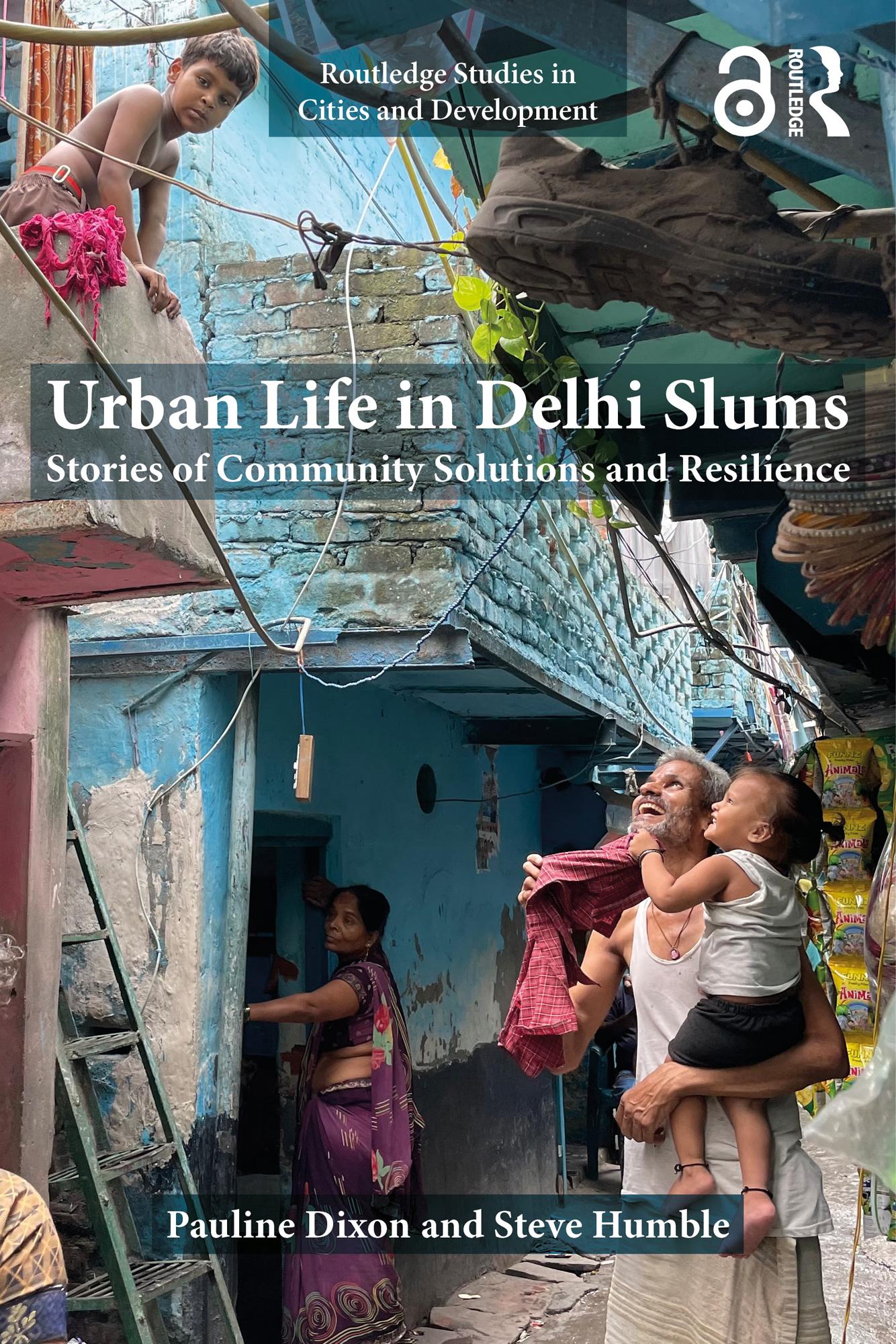
This book investigates urban life in the slums of Delhi, demonstrating how individuals and communities self-organise to solve problems that arise in their neighbourhoods.
Around one-quarter of the world’s urban population live in informal, slum and squatter settlements, representing a significant economic and cultural force. Despite this, settlements are often perceived as marginal, homogenous places, overlooking the resilience and agency of the diverse actors, networks and social groups working collectively within them. This book draws on extensive qualitative and quantitative data from squatter and resettlement colonies in and around Delhi, foregrounding the voices of residents to build a bottom-up picture of place and urban development. The book analyses the contexts in which households operate within their communities and the adaptiveness of individuals living in different slum types, with differing levels of governance. In doing so, the book demonstrates the effect which different institutional agreements and governance systems have on enterprise, empowerment, resilience, trust, dignity and engaging in life that has purpose and meaning.
This book’s detailed assessment of slum spaces and networks will be of interest to researchers across a range of fields, including international development, geography, urban planning, politics and sociology, as well as to policy makers and civil society organisations.
Maksa helposti kortilla, Klarnalla, Apple Paylla tai Google Paylla. Etkö ole tyytyväinen? Sinulla on aina 14 päivän palautusoikeus. Lue lisää ehdoistamme. Jos sinulla on kysyttävää, lähetä meille sähköpostia osoitteeseen hello@memmo.org.
Memmo tekee opiskelusta helpompaa – missä päin maailmaa ikinä oletkin. Meillä yhdistät kurssikirjat ja fiksut opiskelutyökalut yhteen paikkaan: tiivistelmät, visat, podcastit ja muistikortit. Ja sitten Ted, opiskelukaverisi, joka vastaa kaikkeen, mitä ikinä mietitkin. Yli 50 000 opiskelijaa opiskelee jo täällä – rakennettu auttamaan sinua oppimaan nopeammin ja stressaamaan vähemmän.